 In the grand scheme of the tech world, very few of us can say we had the privilege to work with/for Danny Lewin – Akamai Founder and CTO, who we lost on 9/11. Yesterday, on the anniversary of his murder, I assembled our “Akamai Early Days – Pre-2002’ish” Facebook group to use Throwback Thursday (#TBT) to share memories of Danny. There were so many stories from his heroic sales moves and tough discussions to the more humorous incidents like when, weeks before he was about to make bank on the Akamai IPO, he tried to buy a ring for his wife at Tiffany’s and none of his credit cards would work because they were all tapped out. Sharing these stories not only allowed us to all get through what’s usually a very difficult day, with some amount of warmth and humor. These stories also reminded us of the type of leader Danny was and inspired us to be. One post to the group was an email Danny wrote on leadership that my dear friend John Healy had saved for all these years. This note was sent when Danny had just taken the reins as the head of Product Management. It’s truly inspirational and worth sharing. I believe this message planted a seed in many of us over 13 years ago to be better leaders and as I have watched my colleagues from those early days at Akamai grow in their careers – still there or now on to other great companies – I see a little bit of Danny’s spirit and leadership in each of them.
Please read and take notes!
A note from Danny….
Hi All,
I’m writing this email to communicate to you some leadership principals that I believe are very important and that I want to see implemented in our organization. As the management team of product management it is core to what we do to think about the leadership of our organization and of the company. Most management teams don’t spend nearly enough time thinking about leadership – and the result is low productivity, inefficient decision making, and subdued creativity. I want our new organization to be an example inside Akamai of how thinking actively about leadership, and planning how to motivate and empower people, can lead to a great organization that executes flawlessly.
Talking about how to lead people can be a little “cheesey” at times, however in my experience you need to get over the discomfort and create a plan to lead – just like you would create any plan of action. Now, I am no great expert in leadership, but I was lucky enough to have learned some basic principals first hand from some of the best leaders I know of, and I want to try to implement these principals together with you in our organization. Here goes:
Great leaders create great teams. You can always tell that there is a great leader at hand when you see a group of people that are executing as a team. People do not naturally create good teams. Most intelligent human beings are opinionated, irrational, jealous, and angry – but when there is a great leader at hand people seem to put all that under the rug and concentrate on working together towards a common goal.
So, a great leader is someone who can create a great team, and creating a great team means understanding how to manipulate people to work together instead of against each other. Surprisingly, people in groups behave in very predictable and reproducible ways, and hence, there are some common principals that great leaders use over and over again to create teams. It is almost like we humans have built inside of us a basic capacity to function in a team that just needs to be turned on by pushing the right buttons – we need to identify the buttons!
There are a zillion things a great leader does to create and lead a team, but I want to focus on the ones that I believe are the most important. There are only three.
1. Lead By Example
2. Suffer Together
3. Hold People Accountable and Get Rid of Non-performers
These may seem harsh and simple, but please read on to understand what I mean by each one, and how I see us implementing these principals in our organization.
Lead By Example
—————————
Leading by example may seem a trite principal at first – it is “clear” that a leader has to lead by example! However, in many cases people only give lip service to this principal without really understanding what it takes to truly lead by example. There are three big buckets here (in order of importance):
- A leader needs to exhibit truly exceptional abilities in at least one aspect of the personal skills required from team members. This allows people to give the leader responsibility for decisions related to the tasks that the team executes with a feeling of safety. For example, if the team is required to program, the leader must be an exceptional programmer in at least one area. This requirement is ignored in many reorgs and hirings – but is critical to the formation of a great team. This does not mean that the leader has to be the best at everything that the team does – just in some specific areas. No good team member will submit to the leader without at the very least respecting his or her capabilities. A good leader both has the required capabilities AND makes sure that the team knows it! Without this quality – a leader will fail.
- A great leader identifies the job specific behaviors that the team needs to have to succeed and makes sure to exhibit them to the extreme. For example, if a team needs to work weekends to be successful – the leader will work weekends, holidays, and nights. If the team needs to manage costs down to be effective, the leader will reduce his/her own salary and follow up on all expenses. People are motivated on a day-by-day basis by a leader who maintains a superior record of professional behaviors – this tells people that they have to live up to the expectations of behavior because their leader can always hold herself up as an example.
- A great leader understands the basic characteristics that any leader needs to show and they make conscious and concentrated efforts to exhibit them. All people look to the leader of a team for the following things:
a. Clear Goals and Objectives – Teams form around a leader to achieve objectives. Without an objective, a leader cannot build a team. Team members want to see goals and objectives communicated clearly. Vagueness in goals and objectives is the death of team.
b. Crisp Decision Making – Leaders make decisions and teams expect and need leaders to make decisions. Decisions should be made by soliciting input from all relevant team members. But – the responsibility for the decision is with the leader. Decisions need to be made efficiently, firmly, and with authority. Once a leader makes a decision, the team needs to be held accountable to accept that decision. Team members make decisions all the time while working, and for teams to be effective they need to make decisions. The way that a leader makes decisions is emulated by the team, so great leaders make an effort to expose to the team how they make decisions.
c. Follow Up – One of the great pitfalls of leadership is the Delegation Pitfall. A leader falls into the delegation pitfall when they start to truly believe in delegation and that leads to the dangerous idea of Delegation of Accountability. Responsibility and accountability are never delegated. Work is delegated and new accountability created by a leader. A leader is responsible and accountable for everything a team does – no matter what. This means that:
1 – A leader always follows up on work that is delegated. Always and often. Team members perceive micromanagement not because of follow up, but because of shortfalls in other areas of leadership.
2 – A leader manages down to the details. Great leaders follow up on the details of what team members are doing. Truly great leaders create atmospheres where team members feel responsibility, but also search out the leader to share the details.
3 – Leaders always work harder than all of the team members. If you have X work for your team, you can delegate X into three parts, but the follow up and the details will sum up to more than a third of X.
d. Integrity – Team members need to trust the leader. Trust is inspired by integrity. Integrity is the firm adherence to a code of professional behavior that the team respects. This includes directness, honesty, clarity of conversation, and a sense of incorruptibility.
e. Equivalent Accountability – Only leaders can cause the principle of equivalent accountability to take hold in a team. Equivalent accountability is the principle of holding all people and all organizations, at all levels to the same standard of performance and honest dedication to the mission at hand. Teams that operate without equivalent accountability, tend to disintegrate into unfortunate politics and finger pointing, which takes the place of forward progress for the team.
Leadership by example is the number one priority for all leaders – and I expect us in Product Management to focus on the example that we set for our own teams and for the whole company.
Suffer Together
———————–
This one is a shocker!! But seriously…
Teams form around a leader when there is *necessity* for a team. Teams are necessary when there is an external circumstance, requirement, goal, obstacle, or pressure that cannot be overcome or achieved by an individual alone.
In any case where you are required to lead, there must be some necessity for a team – so the circumstances at hand usually provide the external pressure.
Many times, people who lead believe that the goal of a leader is to shield teams from the external pressures. This is a mistake because is prevents the team from feeling the need to become a team. People need the pressure to form a team – this is how people work.
Great leaders keep their teams under pressure at all times.
External pressure alone however is not enough for a team to form. External pressure is like having critical mass for fusion – you still need the compression to start the chain reaction. In team building the compression comes from Suffering Together.
Suffering together means allowing a team to feel pain related to the external pressure as a group.
Truly great leaders make sure that during team formation (and at regular intervals after that) the team suffers together. This may seem simplistic, but groups of people are very predictable – teams need to suffer together to form.
Hold People Accountable and Get Rid of Non-performers
———————————————————————————–
The third and last key principal for building a team again seems trite at first glance. However, this is probably the most misunderstood of the three principals.
There are really two parts to this principal. First, a leader holds people accountable. This has three simple components:
1. People have commitments that they make to the team and to the leader
2. People are measured in a fair and uniform way against the commitments that they have made
3. People are compensated according to how well they perform
This is the simple part.
The more complex, and more critical part, of this principal is Getting Rid of Non-Performers. Getting rid of non-performers is NOT aimed primarily at raising productivity by replacing a non-performer with a performer. Getting rid of non-performers is aimed at helping the group that remains to coalesce and perform as a team. This is one of the most difficult of the three principals to grasp at first. Here is an explanation:
For teams to form, there needs to be trust.Trust between the team members and trust between the team and the leader. The first part of trust is coaxed into being by leadership by example. Next, suffering together forces initial trust between team members – there is no other choice! However, in all teams, after a period of initial trust, non-performers are identified by team members and trust starts to deteriorate. This is a critical time for the team and for the leader. In order to preserve the trust that team members have for each other and for the leader, the leader must remove the non-performers from the team. The result is two main behaviors that cement the team together:
a. The team respects the leader for taking action when holding someone accountable reveals that they are not holding up their part of the bargain. This creates trust in the leader. In addition, when accountability is equivalent for all team members, the leader demonstrates integrity to the team.
b. The team feels comfortable trusting each other – because if they are still in the team, they must be performing against the teams goals and objectives. This sense of safety in the group is key to a great team.
Because this principal is the most difficult to understand, it is the most widely abused. Things to be careful of:
a. This principal does not say that anyone who does not perform needs to be fired immediately. Leaders work with people to improve and to achieve first. Only if after fair chance and help a team member is not performing should they be removed from the team.
b. Both parts of this principal need to be applied for it to be effective. People have to have commitments that can be fairly measured. Only after people have a chance to execute on clear commitments can they be help accountable by the leader, and only then can the leader effectively decide to remove non-performers from the team. This means that coming into a team and getting rid of 3 non-performers does not contribute to team building.
These principals are simple to state, but the way they affect people is quite profound. It is worth thinking about the successful and unsuccessful teams that you have been a part of and recognizing how these principals applied to each situation. Questions to me.
In the new organization we are building I plan to leading our team by these principals – and I want you to think about how you can implement these steps in your groups as well.
[excluded AKAM sales data points here]
Our ability to provide good leadership is key to Akamai not becoming “just another company” – we need to take it seriously as a group.
Things you will get from me:
1. Clear goals for you and your groups
2. A commitment an measurement process you feel is fair
3. A compensation plan based on performance
4. An organizational structure based on what is best for Akamai as a company
What I need from you in the mean while:
1. Stay focused on the Sales Push and support teams
2. Absorb the uncertainty about the future of the org until the end of the Sales Push
3. Input
Thoughts, questions, suggestions – to me.
Thanks,
Danny
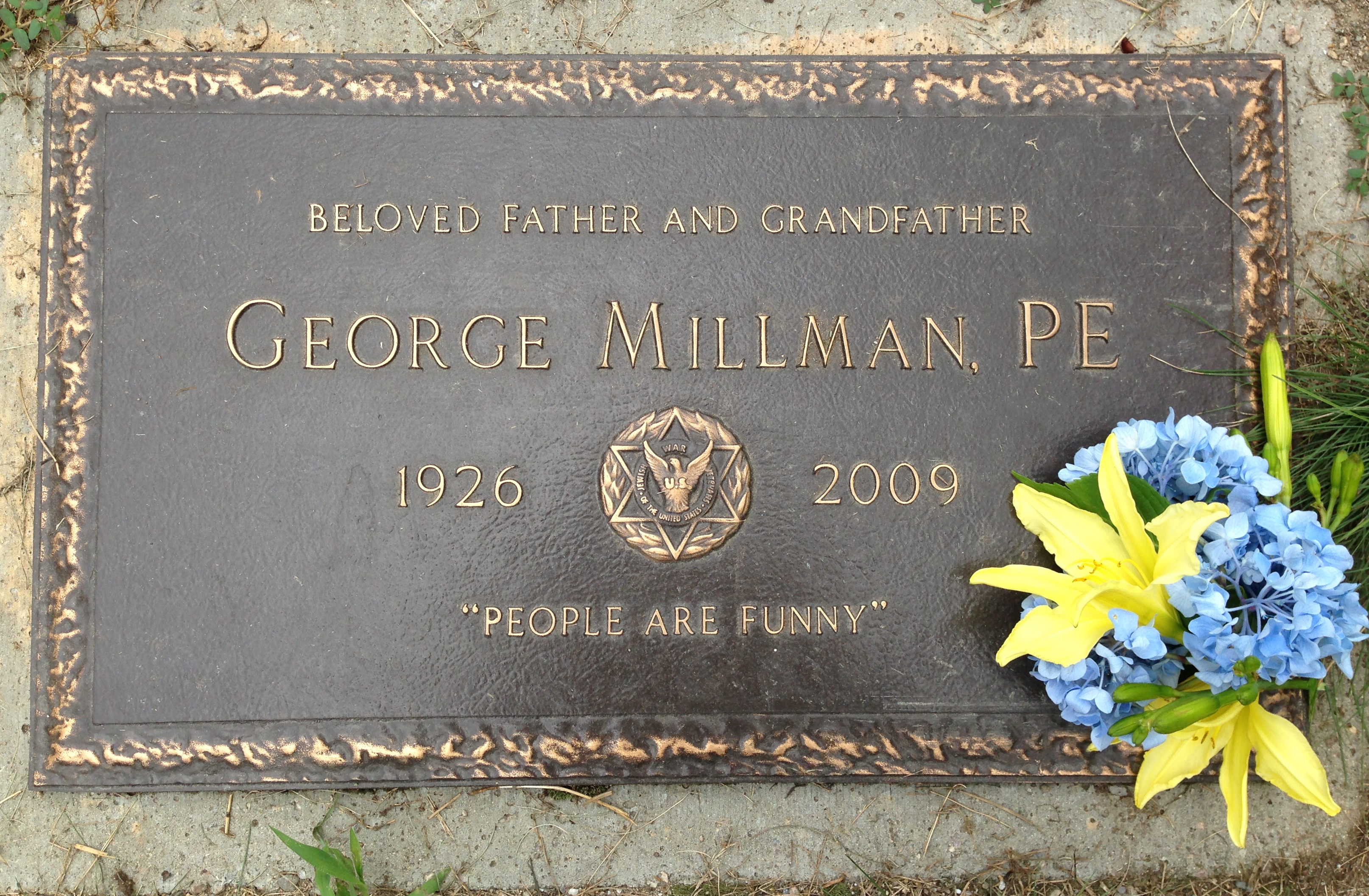 One of my favorite and rather famous family quotes from my Dad, is “People are funny” [see his epitaph, inset]. It was his catch-all phrase for when someone did or said something odd. The saying was his way of recognizing that we can’t always explain why people do or say what they do, we just have to either learn from them or have compassion for them. Sometimes, though, I want to do more than just learn or have compassion. I want to respond with a “hey, what are you doing?” or “you can’t say that!”. Yesterday was one of those days. When someone said something that I brushed off in my head as “people are funny”, but the next morning it still nags.
 led the trigger this summer and decided it was time to head back to work full-time after a year-long hiatus, I knew I wanted to do something meaningful and interesting. I had just finished a stint as an EIR at
 volve the solution until perfect. We don’t want to be heavy handed on defining the solution. We trust the founders to do that. We are just very, very active helpers. This is what makes us a Foundry. We have hired a lean, but extremely talented team of designers, engineers and product people that are assigned to work with our intentionally small set of companies we invest in at a time (3-4, max). We set no specific timeline on how long each company can hang out at Blade, but our goal is to help each company launch successfully with a solid team and a healthy series A. Because Blade can assign significant industry talent on a startup, as well as Blade management assistance, Blade takes some co-founder equity in the venture; the amount varies per deal.
 Being FA and Other Ponderings