Balancing The Many Hats Of A Startup Founder

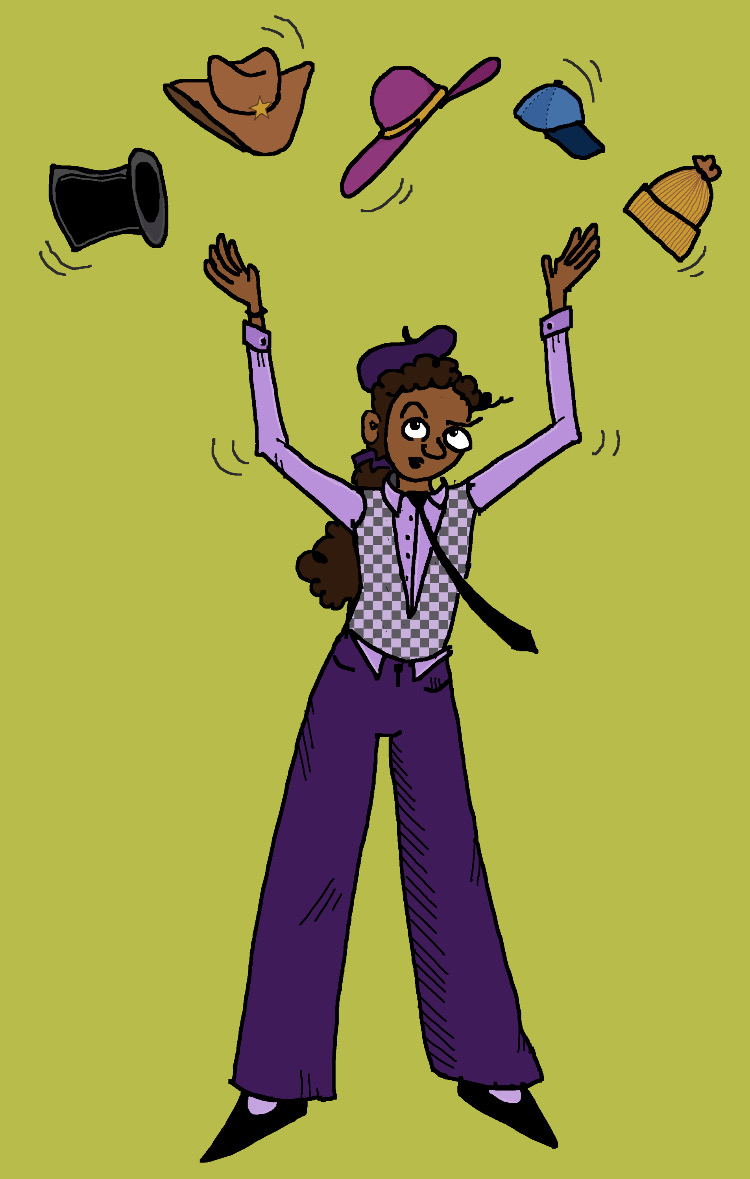
Illustration by Amelia Austin (c)

Startup founders wear many hats that they take on and off as company priorities ebb and flow; especially, but not exclusively, CEOs. One moment they are the CFO and raising capital and the next they are the Head of Product and making critical roadmap decisions. As a quarter-end nears, they become heads of Sales and as the company expands (or contracts) they’re running HR. There can be tremendous stress when a founder tries to wear too many hats at once or struggles to decide which to wear, which to remove, and which to hand off to someone on their team – if such a team exists! The entrepreneurs I coach have used the following framework I’ve created to help them determine which hats to wear and when to wear them. While this article is largely focused on startup CEOs, the framework can also be an effective tool for other organizational leaders.

Originally published in 2020, this post was updated in 2023 with a simplified balance framework within.

* * * * *

The Hats

The most common array of hats that a CEO may wear at any given time fall into the categories below, but no CEO – early stage or not – can split their time and attention so perfectly as the chart denotes.
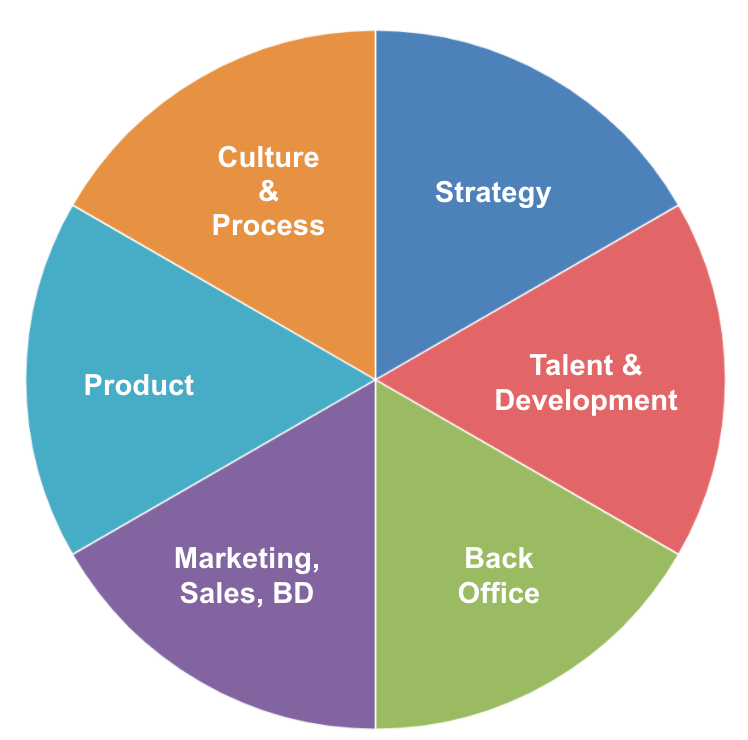
Before deciding which hats to wear and when, a startup CEO should first identify with what their hats (categories) are in their current role. Here’s how I define these very common categories:

Product (What & When): This is what the company produces. It includes customer discovery, design, building, shipping and support. It also includes prioritization and tradeoff decision making for features, new products and services. Many startup CEOs are product people and this can often be one of the hardest hats to take off completely – if ever. Note that being a product visionary and/or a great coder or designer does not necessarily mean one is a great Product Manager – knowing how to make tradeoffs, analyze customer requirements or develop a product roadmap. Be sure to fully explore this “hat” before deciding it’s one to wear or take off.

Culture & Process (How): I was inspired recently by a coaching client of mine who combined these two into one category. If the culture doesn’t work, then the processes won’t work either. Creating high performing teams goes well beyond what workflows, policies and procedures are in place. It is how the team communicates, operates and evolves as a living organism. Never underestimate the value of focusing on culture with process starting from day one! Some CEOs are natural culture builders and system thinkers, but if this is not a strong suit, it’s definitely a hat that should be worn by an in-house culture expert or by someone with natural team-building/program management skills.

Strategy (Why, When & Where): Determining the company’s True North, setting direction for at least the next 12-18 months and making critical decisions about the company’s mission for things like fundraising, revenue growth and human capital. This is also about defining and communicating why the company is doing what it does which is as important as where it is going. Employees and investors/board members all perform better when there is clarity on why the company is moving in a particular direction. This hat is quite commonly on the CEO’s head forever.

Talent & Development (Who): A company will not succeed or grow without hyper focus on the growth of their employees. It is vital to the success and stability of an organization to establish best in class hiring practices and programs as well as to develop each person’s skills as individuals and leaders. As companies grow, CEOs must be thoughtful about where to focus hiring efforts, how to provide incentives to retain top performers and how to grow those with high potential. In addition, as companies grow, there will always be tradeoffs on when to promote from within, when to hire more experienced talent and when it’s time for some team members to move on. CEOs often wear this hat more often than others, but many have COOs or strong HR leaders on their teams who wear this hat permanently.

Back Office (How): A company can have the best product and team in the world and mess things up royally because the back office hat was on the wrong individual’s head. This is mostly finance (accounting, receivables, payroll, etc.) and legal (employee contracts, partnerships, etc.). I’m amazed at how many CEOs wear this hat for too long. It’s ok early stage, but let the professionals do this work once the company hits product market fit and is beginning to operate at scale. Some CEOs are former CFOs who are perfectly capable of leading back office teams, but data shows that CFOs often lack “Outside-in” thinking (a strong mega-trend and customer focus)” and lack the creative and inspirational leadership qualities of a great CEO. While CEOs must always be fully aware of cash flow and the financial health of the business, the back office hat can be taken off once operating at scale.

Marketing, Sales & Business Development (What, Why & When): Brand identity, target audiences, community development, filling the pipeline, closing deals and creating strategic partnerships. These tasks often require CEO leadership – especially early stage when a CEO must stay close to customers to evolve the product and close deals. Some CEOs are very marketing/sales oriented which can derive huge benefits for the business as long as there are capable leaders on the team wearing other hats. However, many CEOs are not marketers and, like the Back Office hat, should leave that work to the experts.

The Have-to-dos, Want-to-dos & Good-ats

Rather than being stressed out trying to balance all hats at once, it is best to focus on wearing 1-2 hats at a time. These 1-2 hats are those that HAVE to be done. It’s great when these prioritized hats also happen to be hats a leader wants to wear and require skills that they believe they are good at, but that is not always the case – especially for early stage CEOs who often need to do a lot of things that they may be good at, but don’t necessarily want to do. Similarly, there can be things a CEO is good at and wants to do, but the business doesn’t require them to do it. Finally, there are times when something has to be done, the CEO wants to do it, but they lack the skill to do it well (self-professed or not!). Here are a few examples:

  • Finances – CEOs may be good at doing the accounting for the business and it has to be done, but often very willing to give that up as soon as they can hire a head of finance. They don’t want to do it!
  • Product/Technology – No matter how much a founder/CEO wants to design or code – and they may be good at it – there is a point as a company scales when CEOs have to take off this hat. They are no longer “have to-dos” at their level. Note, I have seen a number of CEO-Founders take their CEO hats off to dive back into the product!
  • Hiring – Inexperienced CEOs may be managing people and leading teams for the first time. They have to hire and want to hire, but are often unskilled when it comes to sourcing, interviewing and managing the onboarding experience. They also may not know exactly who and what they are looking for and may have to iterate a few times before getting the first few hires right. This is a skill they are not yet good at. However, this may be a skill they have to develop vs. hand off to someone to do for them.

If a company has the runway, the CEO can usually move swiftly to swap or delegate hats with the support of their co-founders and leadership team. They may hire more seasoned leaders or specialized team members and/or offer training for those who need to develop their skills. However, for the fledgling teams who can’t fund these improvements, it is even more important to make hard choices about which hats to wear…even if that means letting some things slide or not executing perfectly. The tradeoffs can be hard and it is extremely common for CEOs to become so paralyzed about which hats to wear that the performance of the company is suffering more than if they had just picked 1-2 hats to focus on and move forward. The focus of this exercise can allow a leader to move quickly from one to the next so things don’t slide for too long.

To get started on assessing “have to-dos (HTDs), want to-dos (WTDs) and good-ats (GAs)”, I recommend a two-pronged approach:

  1. Identify the primary categories (hats) you wear today. This can be done together with personal hats (Mother, Caregiver, Volunteer, etc.) or two different charts – one for work and one for non-work hats.
  2. Reflect on the hats identified and assess your HTDs, WTDs and GAs today – Y for yes and N for no. This exercise requires a large dose of humility and is a subjective assessment – what good means to you, may be viewed differently by others (team, investors, partner, etc.). If unsure, do a 360-feedback survey with your team or ask for candid feedback from your cofounder(s) and/or investors.
  3. Define the actions (if any) you plan to take to change your assessments. For example, if Talent Development is something you have to do, want to do, but you’re not good at it, what steps will you take to improve? Hire a coach or mentor? Take a course? Read a book? Similarly. if you are good at Back Office, but you don’t have to do it or want to do it, what actions will you take to supplant your efforts? Perhaps hire a fractional CFO or an in-house accountant?
  4. Finally, actions are only useful if they can be measured. How will you know you have effectively achieved your goals? Will employee satisfaction or retention numbers improve and, if so, by when? If you are bringing on a fractional CFO, when would they come on board and how will you know you’ve officially taken that hat off? 

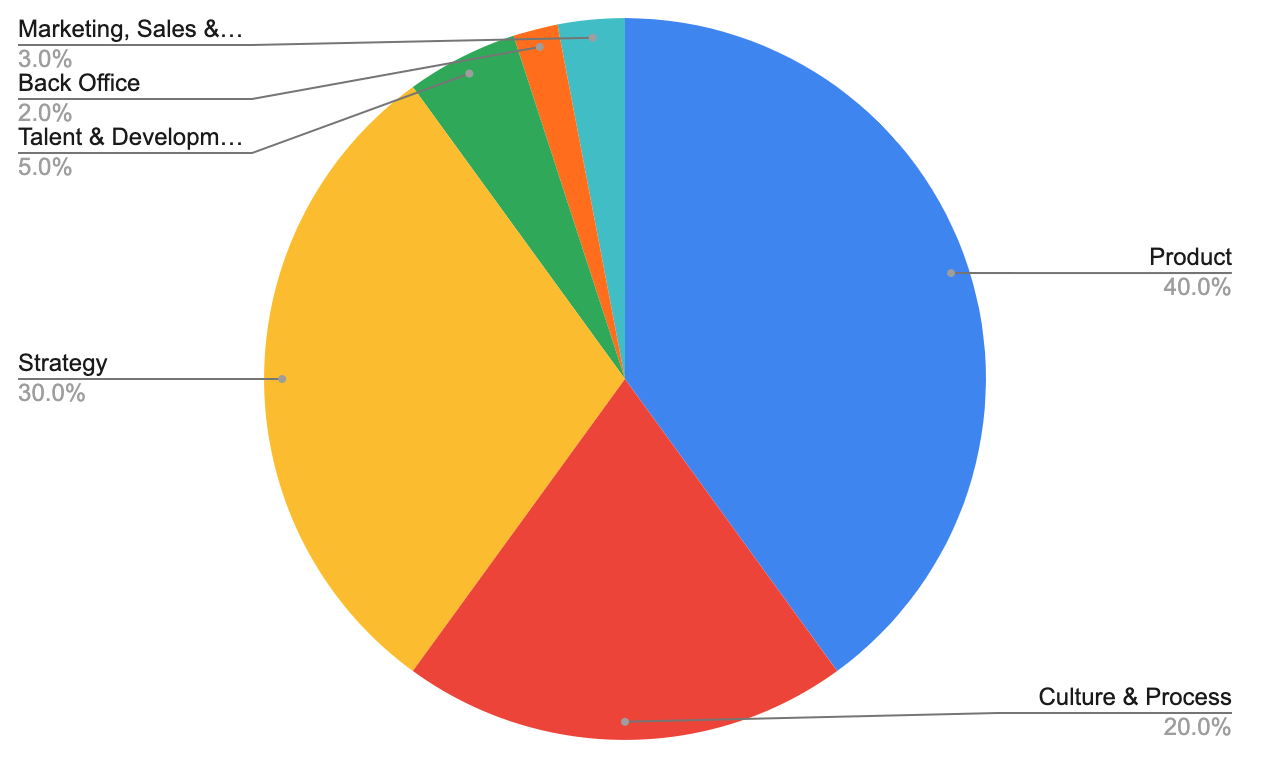
Here is an example of the chart of a CEO of a post series A startup with product market fit:

In the above example, the CEO has prioritized Product, Culture & Process, and Strategy as the hats they have to wear. Here’s how they thought about it these and the other hats:

  • As a former engineer and product manager, Product is their area of expertise and therefore not a hat they need to explore at this time. They will continue to oversee the product team. [NOTE: this particular CEO’s cofounder is CTO who oversees the engineering team]
  • Both Culture & Process and Strategy are still very important hats for this CEO to wear, but they have assessed that their skills in both areas could be improved.
  • In terms of Talent & Development and Back Office, this CEO has squarely decided that they no longer have or want to wear these hats. They realize “people stuff” is an important focus for the business, but fully admit it’s their least favorite thing to do so will hire a head of people to wear that hat.
  • Even though they are good at Back Office work, they really don’t enjoy that work and know it can easily be handed off to a combination of a fractional CFO (finance) and their head of engineering (IT).
  • Finally, this CEO knows they still need to be very involved in Marketing, Sales & BD, but they don’t need to wear the leadership hats for any of these efforts. Therefore, with fresh cash in-hand after their series A, they will hire heads of marketing and sales who will report to them and with whom they will partner to develop their go to market strategy.

I recommend that leaders who follow this process check in on progress quarterly, but it all depends on how one works and how fast change is happening inside the organization. Choose what works best for you!

No Recipe Is Perfect

The exercise above is one way of thinking about how to balance many hats a CEO – or any leader of a large team – might wear. There’s no perfect algorithm and while one might aim to only wear a maximum of 2-3 hats at a time, there will be times when more hats will have to be worn. I’ve also seen CEOs who find that once they’ve mastered a new skill, the hat they didn’t want to wear is actually one that they enjoyed wearing more than they expected.

There are of course sometimes when CEOs realize that no matter how much training, coaching or mentoring they get, they are not able to wear any of the hats well or they just don’t enjoy wearing them. This is often when the company is achieving a level of scale that requires more experience than the CEO’s own professional experience. Some CEOs recognize this and work with their boards to find a successor, but sometimes this can be a decision taken out of a CEO’s hands when their board/investors decide the business can’t wait for the CEO to grow into the role. I’ve also seen many CEOs who find a great partner (President or COO) to run the business with them and augment some of the skills they have yet to or want to master. This not only keeps the company on the rails, but gives the CEO a role model to learn from along the way.

Conclusion

CEOs should be performing a regular assessment of where their time is focused, identify measurable results when changes are made and what actions to take to get there. Even a simple visual like the Before and After on the balance wheels below can kick start the process. Identifying what the current focus areas are (before) and where should they be (after).

BEFORE
AFTER

No matter how a leader decides to assess and prioritize their hats, leaning into the balancing process will likely mitigate stress and potential burnout. What processes have you seen that are effective towards balancing hat wearing? Please share in the comments! Meanwhile, if you are thinking about trying this exercise, I have created a google sheet template for anyone to use to start this process. Feel free to save a copy of the template for yourself and dig in!

* * * * *

NOTE: The balancing hat illustration at the top of this article was created by my daughter, Amelia Austin and is copy-written.

Our (First) Epic Trip To Iceland

My original plan was to go on a spring migration birding expedition with a NatGeo birder who, it turned out, books this particular trip two years in advance. I considered going “Bridesmaids” style and follow their published itinerary online – I even booked my trip on the same dates as the NatGeo tour and let them know I’d be there, conveniently, at the same exact time – just in case anyone bailed at the last minute. In the end, though, I just decided to go for it and plan an epic journey on my own. Then, I had the good fortune of my youngest daughter (21) – having a few weeks of free time before her summer internship started – asking me if she could join me on the trip. Hell yes! Not only was I thrilled to have the cherished 1:1 time with her knowing there are probably fewer of these opportunities to come, but it was now no longer a solo journey. Whee!

I have a few friends who’ve been to Iceland – including one who’s been there six times – so I tapped into their experiences, did a bunch of googling and settled on a deep dive on the southern part of the island (Iceland is considered a European island) instead of the Ring Road which runs the entire perimeter of the island. I did this for two reasons: first, I learned my lesson from our Portugal trip last year that trying to fit an entire country into a ten day vacation leaves little time to enjoy each stop. Second, I knew I would not see the northern lights in the spring so it was a good incentive to return another time of year so I can see the northern/eastern part of the island and, if I am lucky because they are still not guaranteed in winter, the lights!

Below is both an abridged and extended version of our itinerary with my hot takes and advice. I recognize that everyone is different when it comes to travel. So, take what you like from here and make your own adventure. If you do go, please share in the comments and let me know if these recommendations were helpful.

Abridged Itinerary

Days 1-2: Reykjavik – City stuff

Days 3-4: Blue Lagoon – Spa

Day 5: Headed east for Waterfalls, Ice Cave tour, Black Sand beach & natural hot springs

Days 6-7: Glacier Lagoon – Zodiac boat tour & Diamond Beach 

Days 8-9: Headed back west seeing Fjarðarárgljúfur (canyon) and did half of the Golden Circle

Day 10: HOME

Basic Travel Tips in Iceland

Driving is EASY. The Ring Road (Route 1) is flat and paved and other than learning how to wait your turn for single lane bridges and being mindful of speed traps (cameras catch you and email you a fine – got one and it was $120 for only 3km over the limit!). There are also round-a-bouts everywhere and not a lot of traffic lights. The F roads go up into the highlands and they are more challenging and many are closed until the summer thaw. Blue car rental was recommended to me and they were super easy to book online. Get all the insurance and add a WiFi device which is helpful for remote areas with zero connectivity. Get to know the road signs especially for construction/closures (few in the spring). This parking app is handy for several tourist sites where you have to pay to park, but there are kiosks in all the lots where you can just pay by credit card. Driving was an experience unto itself – the views and changes in landscapes are spectacular and you just can’t believe this place is real!

If you plan to go off the Ring Road, prepare for some gravel and ditches. Highly recommend renting an SUV. Every tourist here seems to have the same blue Kia Sportage or a white Duster 🙂 . Pay attention to your gas levels because some areas are very remote and it can be awhile before you can get a fill (same for WC stops!).

  • NOTE: If you like to camp, we saw every possible type of option from huge campers to cute vans and tents. There were also a number of bicyclists who were toting camp gear all over the island – impressive!

Packing for a spring trip to Iceland means tons of layers. I brought a short light down coat, a waterproof rain jacket and a down vest. A few warm tops, t-shirts, several pairs of leggings, one pair of jeans, one pair of joggers, sweats, a flannel, PJs, and lots of socks and underwear. Also some workout clothes for hikes. Three pairs of shoes – my Blundstones, hiking sneakers and regular sneakers – were all worn regularly. Everything in Iceland is super casual. Even at the fine restaurants, people are wearing hiking clothes. No need to bring anything dressy even in Reykjavik. Definitely bring 1-2 bathing suits, flip flops and a quick dry towel for the hot springs. Also recommend a waterproof bag for your phone/camera and rain pants and waterproof gloves if you plan to do the cave hike or get on any boat. There are also a few waterfalls you can go “in” but only if you are in rain gear (or get soaked).

Language is not an issue – everyone speaks English and everyone is super nice – most of the tourist industry in Iceland is run by internationals so you’ll meet lots of cool people from all over the world. 

Cash: We never exchanged any USD for ISK. Everything is paid via credit card and tour guides do not accept tips. The exchange is weird though – currently 135ISK to 1USD so you spend “thousands” on everything, lol.

Food: Amazing – whether it’s a cafe or fine dining, it’s all good. The island is doing a lot with geothermal greenhouses so there’s more vegetables than expected too. The island is also very vegan friendly everywhere. The Icelandic glacier water from the tap is SO GOOD. I am sad to be without it now. The freshest, cleanest water I’ve ever had.

Weather and Daylight: In June and into July, it does not get dark at night – at ALL. Bring eye masks or your sleep can get really messed up. Some of our hotels had excellent room darkening curtains, but several did not or they didn’t close well, so don’t count on them. The temperature ranged from 10-16 Celsius (50-60 Fahrenheit) while we were there. We lucked out with only one rainy day and it was a travel/down day so none of our stops or tours were impacted by weather, but that’s unusual so keep track of the weather and look for alerts from tour companies. It was often overcast in the mornings with the sun coming out in the afternoons. We saw only 2 sorta-sunsets the whole nine nights we were there.

Finally, the only things I’d change if I did this trip again:

  • Save the Blue Lagoon for the end. It would have been a nice way to cap off the trip after a lot of hiking and car travel. Also, closer to the airport. 
  • Maybe do just one day in Reykjavik. Pretty city, but you can get a decent feel for it in a day.
  • Book an AirBnB or two between hotels and do our own cooking. While yummy, constant restaurant eating was heavy on the digestion and expensive.

OK, now for the longer itinerary…

Days One & Two – Reykjavik

We arrived early in the morning from NYC as one does for most trips to Europe. Opted to taxi ($150) to Reykjavik vs. have a car in the city and pay for a rental and parking for 2 days. The city is very walkable. No car or even taxi needed once you’re in town. Stuff to see and do: 

  • Spring only: Puffin boat tour right from the old harbor. Was an hour to go out to this little island where they nest and totally worth it because they are guaranteed to be there. Booked easily online the day we arrived the next morning. If you go, try to do first thing in the morning – they are most active and visible then!
  • Tour the Opera House (inside and out – spectacular), photos on rainbow road, see the famous cathedral at the end of rainbow road (and take the elevator to the top for great views), shop, eat, go to the waterfront (opera house is there), check out tons of street art and explore! We also walked through a park on a lake to the Nordic House on the university campus – it’s an architectural gem and was a must see with my budding architect daughter.

We stayed at Hotel Borg which is a basic business hotel. Nothing special, but right in town and very convenient to everything. Also, if you like hot dogs, Bæjarins Beztu’s stand is right around the corner. While I am a pesce-vegan, I admit I tried one and it was pretty good!

Speaking of food, we loved Café Babalú (great crepes and an odd Flintstones decor – eat upstairs if you go there) and the Laundromat Cafe for breakfast. Braud & Co has amazing bread and treats. Tost is also good (and goes from a cafe to a bar at night).

img_2686 For foodies, dinner at Dill is worth it. It was Iceland’s first Michelin star restaurant and has a 2-3 month waiting list (a spot opened for us a few days before we arrived). Fast before you go – each course is really like 3 mini courses – we counted 18 in total and the meal was 3 hours long. It was a LOT of food, not vegan or GF friendly and my belly paid for it, but it was worth it.

Days Three & Four – Blue Lagoon (BL)

We picked up our rental car right in Reykjavik and drove 45 minutes to the BL, stopping at a horseDSCN7187 farm to consider riding, but decided against it (I was still not feeling it after our dinner at Dill). Had I known we’d see these beauties all over the island the rest of our trip, I would have skipped this stop. I definitely want to ride next time I am there though! We also stopped at the geothermal site of Grindavík, which was not as nice as others we visited so unless this is your only chance to see these types of sites, skip it. It was a good way to get our “car legs” though as it was a bit of off-roading to get there.  
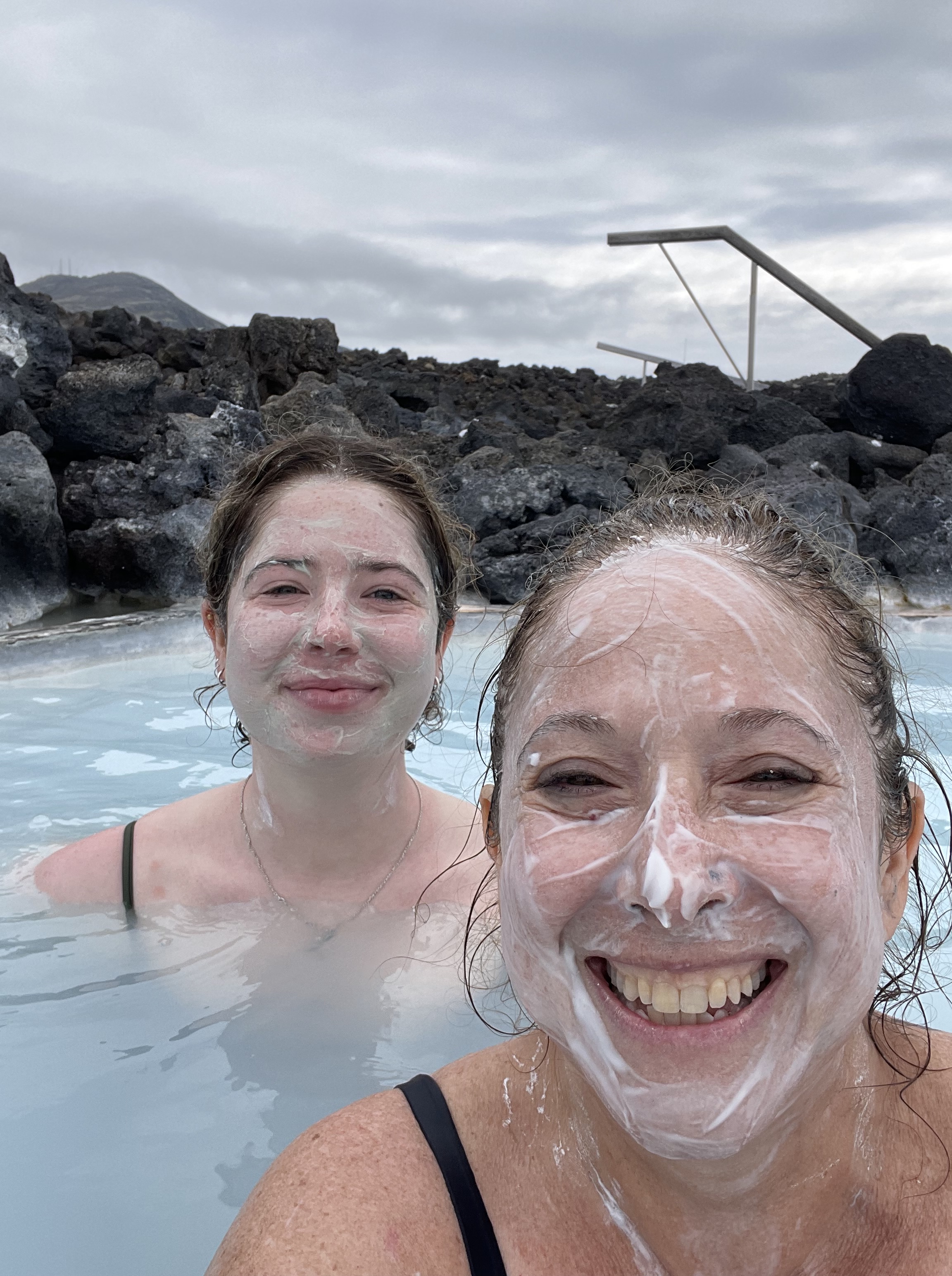
We stayed at the all-inclusive Retreat Hotel at the BL. Definitely the most decadent part of the trip. Bougie, but money well spent and as noted above, if I did this trip again, I would have made this the last stop to recharge and soothe after a ton of activity. Even better, bookend BL on either side of the trip 😀

We did the public part of the BL upon arrival and took full advantage of the three-step mask ritual there. Bring your phone in a waterproof bag because it’s the most bizarre experience to capture – we laughed the whole time we were in there. The Retreat Hotel itself has a special ritual for all guests at the spa in a cave-like area before you get to the public lagoon. Just do it. It’s freaking amazing. Also, do their signature floating water massage – not so much a massage as it is an experience involving lying on floating mats and head rests, a salt scrub, oil rub and a massage.

Note: You can book a several-hour day pass at either the public side or retreat hotel side of the lagoon without having to stay there. From what I heard, these fill up so unless you go with a tour company, book these passes in advance.

IMG_7110My daughter and I both have psoriasis and we experienced the healing powers of the lagoon water first hand. Even just a few soaks helped our skin clear up and it felt so smooth and healthy! Also worth noting, while great for your skin, the water is brutal on your hair and makes it stick to your head/unable to comb. Try to coat it with conditioner before going in and keep it out of the water. If you do the floating massage, they’ll give you conditioner to slather on your head. Even with that, it took two washings before our hair felt somewhat normal again.

IMG_2798The best thing about the Retreat Hotel is it has its own private lagoon that weaves around the resort and you can have a peaceful soak without the crowds. There’s also a pool bar where you can sip champagne or fresh pressed juice while you soak. We ate at both of their restaurants, Moss (also Michelin star) and Lava. I would not recommend Lava – food was ok, but service was bad, it was crowded with tourists and you basically watch people partying in the public part of the lagoon while you eat, but Moss was excellent (reserve in advance!) and very vegan friendly. The spa restaurant which is just open for snacks and lunch is excellent and the hotel’s breakfast in the lobby (included) was quite good. Also, the hotel has a nice gym and yoga class every morning (basic, but a nice stretch).

Days Four & Five

25-691ADC77-B27E-4289-8336-43DAE9C21E11After two relaxing days at BL, we began our countryside adventure! We started at Seltun (geothermal area) first which was cool, but no geysers and very sulfuric air. A short distance from there is Krýsuvíkurkirkja which is a lovely spot to take pretty pictures of landscapes, a tiny church and the first of what turned out to be zillions of sheep all over the island (there are more sheep than people in Iceland!).

60-F38D36E4-C49D-41FE-ABEE-AC2F7C62E9A6

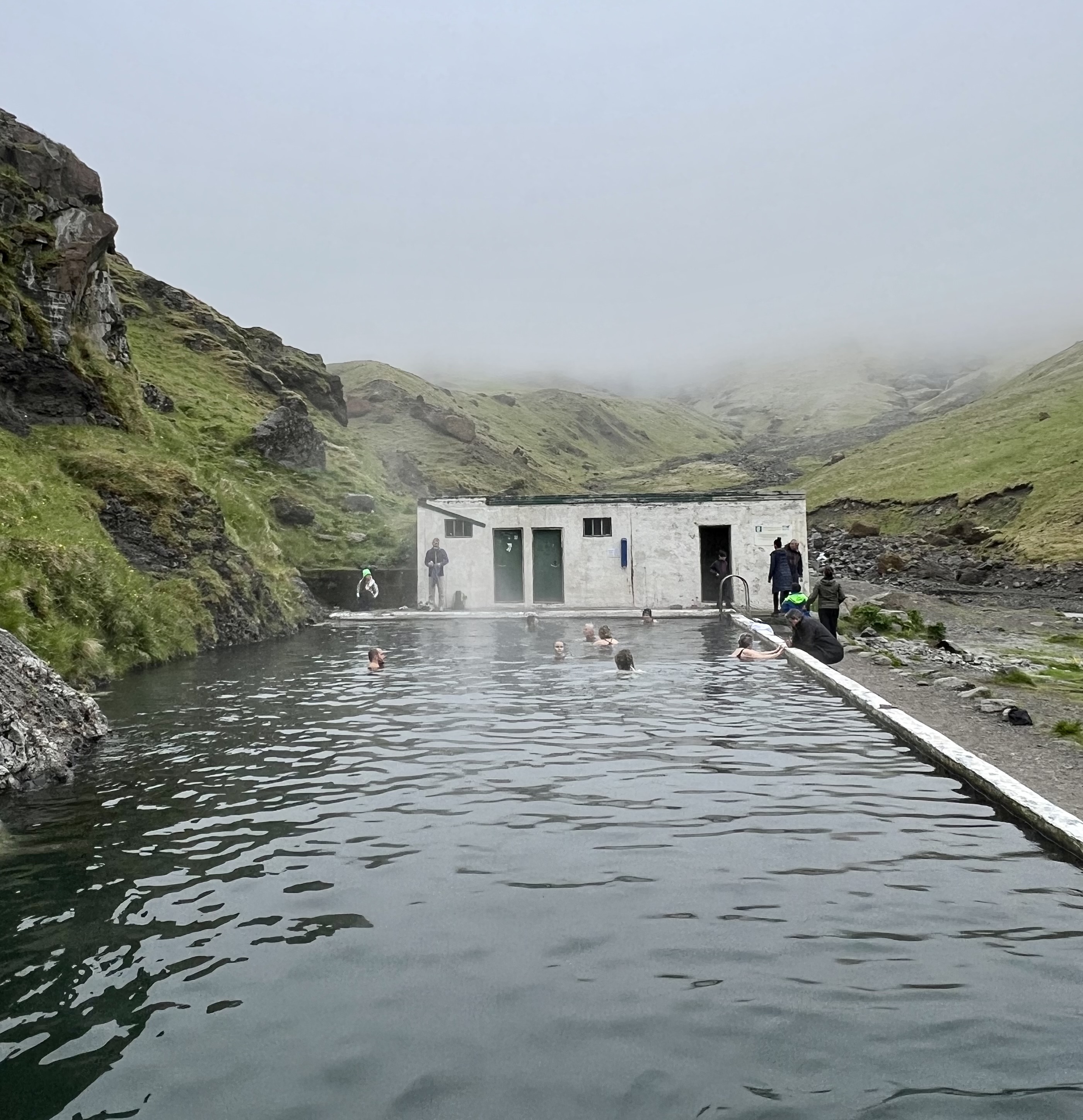
Our first Icelandic waterfall was Gluggafoss which is off the beaten path and hardly had any tourists. Worth it! Eliza climbed up the steep path to see the view above which included another small waterfall.  IMG_2865From there, we stopped at three more waterfalls, Seljalandsfoss & Gljúfrabúi which are right next to each other (the latter is a wet walk-in if you’re game, we were not dressed for it so passed) and then the famous Skógafoss (where Jon and Daenerys kiss in GoT) that has a rainbow on sunny days (it was overcast when we were there).  We had two more waterfalls on the agenda that day, but decided to bail in favor of a hike out to the Seljavallalaug Swimming Pool which involves off-roading to a random parking lot, then a gentle ½ mile hike through a valley and lupine fields to this hot spring pool in the middle of nowhere. I did not swim, but Eliza went in and reported the changing rooms are basically caves, the water is warm and deep and where she could touch, it was slimy bottomed, but generally pleasant and a very local spot with few tourists. I would swim there if we go back. Flip flops and a quick-dry towel are key here!

IMG_2891  IMG_2895  149-37993BED-A207-4AB9-B7E6-FBE21C188D7C  IMG_2920
Umi hotel is close to the pool and we booked it for one night as a stopover on our way east instead of driving another two hours that day. The map for all these stops including the two waterfalls we skipped is here.

The next day, we set out for the Vik and the Ice Cave tour. Terrifying, but SO FUN. The crew thereIMG_3036 does a great job preparing you and they give you helmets and strap-on cleats for your shoes. We drove 45 minutes in a super jeep to get to the glacier where you then put on your cleats and do a short hike out to the cave entrance. The cave has a series of planks with ropes to skirt your way through – ice cold streams flow rapidly below you. Until I got comfortable using the cleats, I was terrified I’d fall in, but I got past it pretty fast and was only terrified again when they told us we had to return the way we came (it was not a loop!). The second IMG_7548time through was much easier though. You will get wet on this hike because the glacier is melting. Rain pants and waterproof gloves to steady yourself on the ice are key and use the ropes as you go. I did not take out my good camera even though I had a waterproof cover for it because I was so afraid I’d drop it on the ice. Also, it was around 50 degrees that day so even though we were IN a glacier, we were not cold.



IMG_3071DSCN7678After the tour, we had lunch at Suður-Vík cafe near the pretty church on the hill. The lupine flowers are in full bloom this time of year and blanket the whole island with purple. After lunch we did coffee at Skool Beans – it’s a cafe in an actual school bus. Amazing mushroom tea, mochas and matcha. Prepare for a 10-15 minute wait for your coffee, it’s a tiny and very busy place! 

IMG_3083From there, we visited Dyrhólaey and Reynisfjara (the Black Sand beach which is a Game of Thrones film site). Dyrhólaey has stunning views of cliffs and the sea. We parked at the top and walked part way down, but decided to drive to Reynisfjara to see the crazy rock formations. Dyrhólaey is also a destination for Puffins, but it’s hard to access that beach in the early morning when they are most active. 

DSCN7730By chance though, we lucked out and saw a puffin there who landed right in front of us while we were taking in the views – it was an even better look at this gorgeous bird than we had in Reykjavik. Both of these sites were very crowded with tourists but worth it. DSCN7741

After a very full day, we drove just under two hours to the Fosshotel at Glacier Lagoon, had dinner there. Dinner at the hotel was lovely. They require reservations even though most of the diners are hotel guests. You also need a reservation to use the hot tubs and sauna although no one was checking us in when I went to use the sauna that night after dinner.

Days Six & Seven

Fosshotel is super cool with stunning architecture and views on the side of a small mountain. It also has two hot tubs and a sauna. It’s in the middle of nowhere too (like everything out east!).

DSCN8258First thing in the morning, we went to the Glacier Lagoon for the 9am zodiac boat tour. Definitely a highlight of the trip and we almost missed it because there are a half a dozen different tours in that area so make sure you know where you’re going if you do it! The tour company suits you up in a water tight jump suit and life jacket before taking a five minute bus ride to the lagoon. The boat holds about ten of you so it’s a nice small group and the guide was very knowledgeable about the lagoon, glacier, the ice structures and many seals lounging on the floating ice. The whole place is mind blowing and I took close to 600 photos that day! Because the boat was super small, we got very close toIMG_7874 everything. I definitely recommend this over the crowded duck boat tours. You can also do a kayak tour. Make sure your phone and camera are in waterproofed housing. The boat goes fast sometimes to cover a lot of the lagoon in 90 minutes so you do get wet. The suits were also warm and between those and the layers we already had on, we were not cold at all.
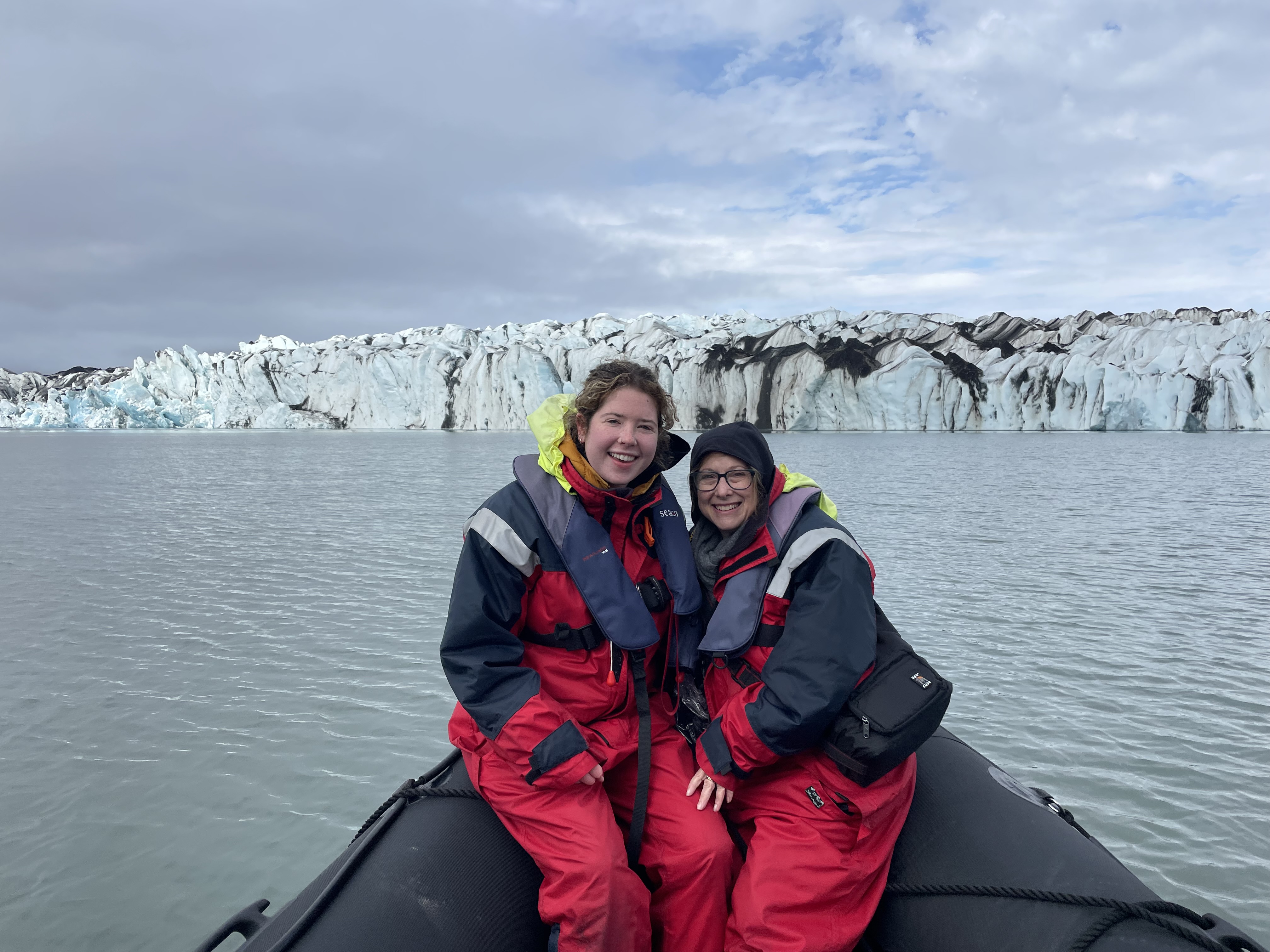


After the lagoon, Diamond Beach is right across the street where chunks of ice lay all over the black sand. Go to the right side of the river (map sends you to the left) for the best ice pictures. Look for seals in the river too. They swim in and out of the lagoon from there. 

           IMG_3193   DSCN7996DSCN8441

We were pretty burnt out by this point in the trip so after Diamond beach we went back to the hotel to relax, catch up on emails and had lunch at their bar. Dinner was also there again as there’s really nothing else food-wise in the area.

DSCN8490The next morning, we drove west again. First, we stopped at Skaftafell national park for a 4 mile hike that included another Game of Thrones film site – a crazy looking waterfall. The hike was moderately challenging with a sharp incline at the start. We went to the first summit and then downhillIMG_3296 was pretty easy from there. After Skaftafell, we stopped at Fjardarargljufur for epic views of the canyon. Recommend driving off-road or hiking to the top for the best views. Off-road isn’t too challenging, just  narrow at some points. Pictures don’t do this spot justice. It’s a must-see in person! After the canyon, we drove about two hours to Hotel Ranga, stopping in Vik on the way for lunch at one of the tourist cafes and then another coffee at Skool Beans (because, so good!).


Days Eight and Nine

C3A236FD-EB68-40E5-A7F4-B41CAB5E074BThe popular Hotel Ranga is not too far from Umi where we had stayed a few nights before. The hotel has a ski lodge vibe and was surprisingly one of our favorites other than the Retreat at BL. They have three hot tubs (and they are HOT) aside a river that looks out to several snow-capped mountains. Tons of birds on the property (!), yummy food and rooms were cozy and comfortable

After a good night’s rest, we made our way inland a bit to the famous Golden Circle. With such a packed trip at this point, we decided just to hit two key spots on the circle – Gullfoss and Geysir – I hope to return one day and hike Þingvellir (Thingvellir) which is a UNESCOIMG_3357 national park. Gullfoss is breathtaking and nothing like the other waterfalls we had seen thus far. Definitely worth walking to the top to get all views. Geysir was also cool with an eruption every 3-4 minutes. Nice hike to the top of the hill too for cool vista views and to see the eruptions from above.

A spontaneous stop to the Fridheimar Restaurant was our final destination. This is a geo-thermal IMG_3405powered farm that grows spectacular tomatoes, basil and sunflowers in a greenhouse that also serves as a restaurant and bar. Everything is tomato themed including the cocktails and lattes. While a bit silly, it was actually pretty yummy and I had one of the healthiest salads of the all meals we had in Iceland. They also have a crazy good bread bar and the tomato apple crisp served in clay pots was excellent.

We also stopped along the road several times this day to take photos of the many, many Icelandic horses that are all over the island.

               DSCN8779. DSCN8776

Day Ten

We slept in, had a lazy breakfast on our last day and then made the two hour drive to the airport to return the car and fly out that afternoon. We could have probably snuck in one more geothermal bath or hike this day, but after nine days, we were ready to get home. Of course, now that I have slept in my bed for the night, showered and checked on my plant babies, I could seriously turn around and do it again tomorrow. My water bottle is almost empty of that fresh clean water and my body is craving a good hot soak. It was an epic journey and such a special time with my youngest who was an amazing copilot and showed such good humor and support when I needed it (especially in that ice cave!).

Until the next time, Iceland!!

All photographs in this post are the creations and property of Julia B Austin 2023 (c)

Founder Separation Anxiety

You’re the founder of a growing startup and it seems like just yesterday that you were a team of five, sharing a co-working space with one table and five chairs. There was an open flow of communication in the room and unless someone’s headphones were on to signal they were “in the zone”, anything was fair game to chat about.

Full Stack Engineer: “I’m thinking of moving the ‘Learn More’ button to the bottom right of the home page.”

CEO: “Sounds good. What do you think about what that potential customer said yesterday about our pricing? Should we push harder”?

CTO: “I d’no. Maybe we should talk to a couple more prospects and compare reactions?”

Full Stack Engineer: “Just so y’all know, I am probably going to revamp the pricing page layout in the next few days so if you’re thinking about changing things, lmk sooner vs. later, cool?”

CEO: “Totally, no worries, friend.”

Customer Support Rep: “Keep me in the loop too, all. I want to be prepared if customers start asking questions about the new layout or pricing changes.”

CTO: “You got it, friend.”

Operations Tech: “Yo, after lunch today can we talk about how capacity is doing with all these new customers? We might need to buy more cloud storage.”

CEO: “Ugh, I was hoping to keep our spending down before we close our A round next quarter, but I guess that’s a good sign that we’re selling. Revenue, yay!.”

It wasn’t unusual for the whole team to know every facet of the business. Where you were with sales, fundraising and how customers were feeling about every little change you made to the product. You saw each other’s work on your screens or perhaps, if all remote, you were in a non-stop thread in Slack with very few separate channels. It was intimate and cool….intoxicating. Even as the team grew from five to twenty five, there is this sense of deep connection that the early employees had with the founders of the business. A unique badge of honor which often garnered the respect of newer employees eager to hear the lore of those early days. However, with that growth, there becomes less intimacy and these early employees often find themselves with managers between them and the founders. This can create separation anxiety which manifests in different ways — from temper tantrums in meetings to disengagement and generally bad behavior — and can be the root of cultural issues or worse, unwanted attrition.

While many early employees will adjust to the scale of the business and the founders letting go of the details, some can become frustrated. They no longer feel “in the know” or are recognized as the CEO’s trusted advisor on particular decisions for the business. They are scolded for going around their new manager’s back to get the CTO’s opinions on their work or they try to undermine a decision made by the new head of a department by complaining to the CEO. Even finding time to just chat with the founder is a game of calendar Tetris for them. “They don’t have time for me anymore.” is a common sentiment. For these employees, you (or they) may feel that a scaling business is not a fit. Early stage is their sweet spot and a transition may be necessary. However, before concluding that it’s time for some of these early team members to transition, here are a few suggestions to manage Founder Separation Anxiety:

  • Openly discuss this situation with your team. It is a natural aspect of growth and success, but it requires managing expectations. “Good news, we’re growing! But this means we are going to be shifting how we work and some of us will be less in the know than we used to be.” This can be a great opportunity to ask the team what they need and where they are feeling the biggest gaps. Address what you can, but accept that you may not be able to honor all their asks. For example, being less in the know on board-level or financial issues as they may have in the “old days”.
  • Make sure you are accessible to your entire organization as much as you can be in both structured and unstructured ways. Create open office hours or lunch-n-learns for team members other than your direct reports to get time with you. Open office hours can be a standing block on your calendar (1–2 hours per week) where anyone can pop into your office (or jump on a zoom if you’re remote) and chat. Be clear that this time is to chat or bounce ideas around, not for decisions or setting strategy. Some newer employees might just want the time to get to know you better — your founder’s story or background (or theirs). These are invaluable opportunities to build a connection with your team. Unstructured time is simply ensuring you’re not tied up in meetings all day and have blocks of open time to walk around the office or pop into different Slack channels or Discord or whatever your business uses for remote communication.
  • Offer suggestions on how and when team members should book time with you outside of office hours. E.g., “Office hours are a great way to bounce ideas around with me or share ideas or thoughts about the business, but if you want to go deeper on a topic, let’s schedule a specific time to discuss and include others as needed.”
  • Set boundaries for early-timers when they try to end-around new bosses. Be open to listening to their ideas/complaints, but redirect them to their new bosses to make decisions. Coach them on how to express their concerns with their new bosses vs. offering to talk to their boss on their behalf or (worse) commiserate with them. Just because you used to sit next to them in a WeWork a year ago, does not afford them the privilege of undermining their leadership. Hold the line.
  • Be mindful of perceptions that come from “special relationships” between founders and early employees. It is not unusual for early employees to form personal relationships with founders outside of work. Late night beers or weekend family BBQs may have become routine. With a larger team, consider how these special out-of-work connections reflect on your leadership. Optically, it can infer special treatment or that some employees are privy to deeper business details. This does not mean you should end these friendships, but you should set clear boundaries and be transparent about them to the rest of your organization — especially if one of these individuals now reports to someone who reports to you. “Lisa, let’s be sure we don’t talk about work when we get our families together this weekend.” For the team, even just naming this, can allay concerns, but again, transparency is key. To Lisa’s new boss, you might say: “Lisa and I became BFFs in the early days of the company — our kids are BFFs too — but we’re committed to not discussing work when we connect outside of the office”.

This may seem like a lot to manage, but the time investment should result in team members better adjusting to the growing separation between them and the founders and having less anxiety about their roles in the business. You may not retain all of your early employees, but these tactics should mitigate some loss and will likely contribute to fostering a healthy culture of transparency, trust and respect among team members.

What creative techniques have you employed to mitigate Founder Separation Anxiety? Please share in the comments!

Overhauling Higher Education For Today’s World

University Nevada Reno (UNR) Living Learning Community (visual concept)

Around seven years ago, I had an epiphany that the delivery of higher education would change dramatically. This was triggered by the fact that we had shifted our hiring game in the tech community from caring about pedigree (MIT, Stanford, etc.) to “tell me what you have actually done”. While pedigree demonstrates academic aptitude, it does not speak to a candidate’s ability to execute. Now more than ever, especially in a time when building is going to be what stimulates the economy, those who can execute will excel.

My vision seven years ago (which still stands) is the disruption of higher education as we know it today. Instead of high school students aspiring to get into their top choice college or university and moving on campus for a singular experience, we will move towards a model where young people want to leave home, further their learning, but care less about the brand of institution(s) they attend, or even getting a degree, and care more about their ability to learn what they need to be productive in society. Parents will care less about brand and the degree too, but will want their kids to have a solid, post-secondary, education in a safe environment. College age students (18–22’ish) want to be with likeminded peers who are either focused on similar academic interests or they want a diverse community to expose them to other areas they may not otherwise know about. I loved living in a dorm at UMASS Amherst with peers pursuing all sorts of topics I knew nothing about. I still attribute my interest in marketing to having a roommate that was a marketing major while I was an art major.

Now that most colleges and universities are forced to teach online, and the cost of higher education is through the roof, we are primed to change the shape of post-secondary education. I believe young people in the next 3–5 years will want to move out of their homes (and their parents will be eager for them to do the same), to a city of interest and pursue further education by joining live-in learning communities vs. applying to a specific college.

The model would look something like this:

  • Live-in learning communities will be developed in popular college cities (Boston, NY, SF, Austin, etc. — perhaps eventually abroad as well). These will be dorm-like buildings with high bandwidth on-line learning capabilities like high-tech video rooms, Jamboards, and amenities such as gyms and community kitchens. There will be Resident Assistants and administrators to oversee safety concerns of parents and establish behavioral norms. There will likely be some sort of student-run government, clubs and special programming depending on the live-in learning community.
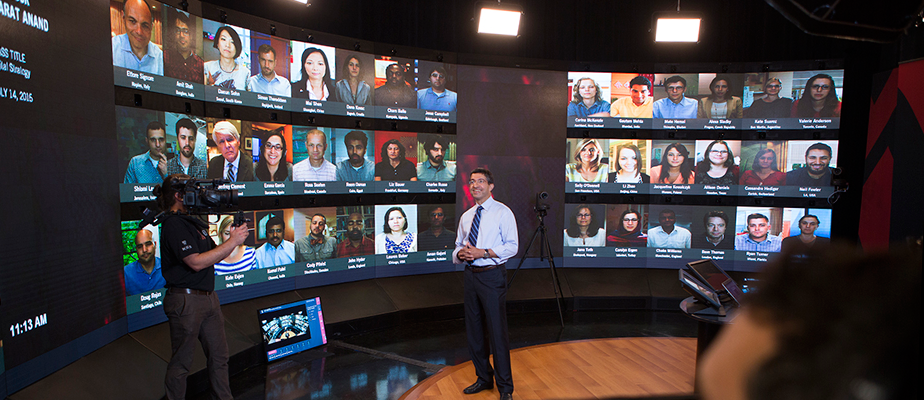
  • Qualified, remote educators will offer courses similar to how HBX delivers online experiences today (below) or simply via Zoom with smaller groups.

  • Prospective students will apply to live in these communities based on city of interest, peer group and other criteria (amenities, special programming, etc.). Applications will focus on diversity, inclusion and ability for students to contribute to the learning community vs. SAT/ACT scores and high school accomplishments. All applicants will be peer reviewed and cost will be commensurate with ability to pay. In a utopian world (one can dream), the government would subsidize these programs.
  • Live-in learning communities will provide cross-university, curricula based on skills development. For example, a computer science program may be a series of courses offered from not just local universities, but online courses from across the country. Certifications or hours of learning may replace degree programs. A foundational curriculum of core competencies such as public speaking, project management and financial skills will be woven into every program.
  • Most important, live-in learning community curricula will be focused on experiential learning. Most if not all courses will be project-based — some individual and many team oriented so students are developing real-world experiences that also demonstrate their ability to execute.
  • Study groups may form or be required in each live-in learning community or on-line. New opportunities for social connections and networking will be within and between learning communities.
  • Completion of programs may be based on committee reviews and a PhD-theses-like defense. Alumni communities will be fostered post-completion of any program.
  • Prospective employers will recruit from these live-in learning communities. Students’ inherent training to work remotely will be an asset to the growing number of companies establishing remote workforces. The foundational skills development would be seen as a key differentiator of these programs.
  • This will of course require current colleges and universities to partner with whomever creates these live-in learning communities. The question is when, not if, these partnerships will form. For many universities, this will ensure their survival and could enhance vs. dilute their brand.

While there will still be some professions, like doctors and lawyers, that may still need the discipline of a more rigid degree program, I can imagine many students (and parents) taking advantage of the ideas above. Perhaps there are entrepreneurs out there already developing this idea. If so, send them my way…I’d love to support their efforts! …and if you have other ideas about this concept, let’s riff.

Time, Talent & Treasure

Bootcamp 2020

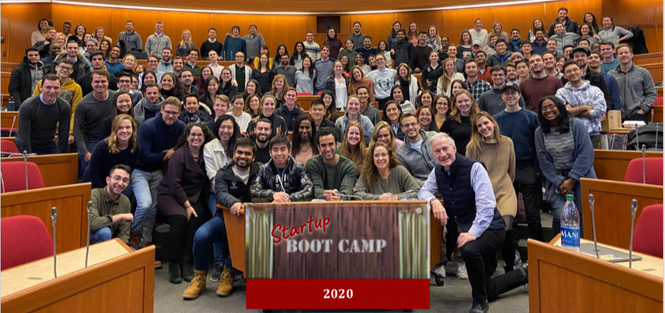
Bootcamp 2020 students, Faculty & TAs

I am a former Trustee, alumna, parent, donor and longtime community member of a non-profit organization that’s mission is “changing lives for good” through the the community’s gifts of time, talent and treasure. As a hundred-plus year old organization with a diverse group of alumni, staff and trustees, we strive for our community to give beyond dollars (treasure) and to pay it forward with their time and talents. This mission is something I deeply believe in beyond this particular non-profit and extends into my personal and professional life; and it’s something I value and look for in the people I work with. 

If you follow me on Twitter, you know we just wrapped up an eight day Startup Bootcamp at Harvard Business School (HBS). This program was brought to life four years ago by my mentor and friend, Professor Tom Eisenmann who recognized a growing need for our first year MBA students to explore their startup ideas and understand the world of entrepreneurship through experiential learning. First year HBS students enroll in a prescribed curriculum known as their Required Course year, and these students are referred to as “RCs”. RCs wanting to start companies, learn about joining startups and/or venture capital have limited time outside of classes and other school-related activities to pursue these interests in their first year. The advent of Startup Bootcamp created that time and programming to explore before their second (“Elective Course”) year. Approximately 200 students take time out of their January break to return to Boston to immerse themselves in startup land. Startup Bootcamp is free to enrolled students and is seen as a Pass/Fail course on their transcripts.

Those who know HBS, know our primary teaching approach is via the case method. This is an excellent way to help our students understand the complexities and challenges of business through the lens of a diverse set of protagonists and companies around the world. Many of our course sessions for each of the hundreds of cases our students read invite the protagonists into the classroom to discuss their perspective and “what happened after the case” with our students. This time with these leaders is invaluable to students and often the leaders get as much out of the experience as they impart their wisdom and share lessons learned.

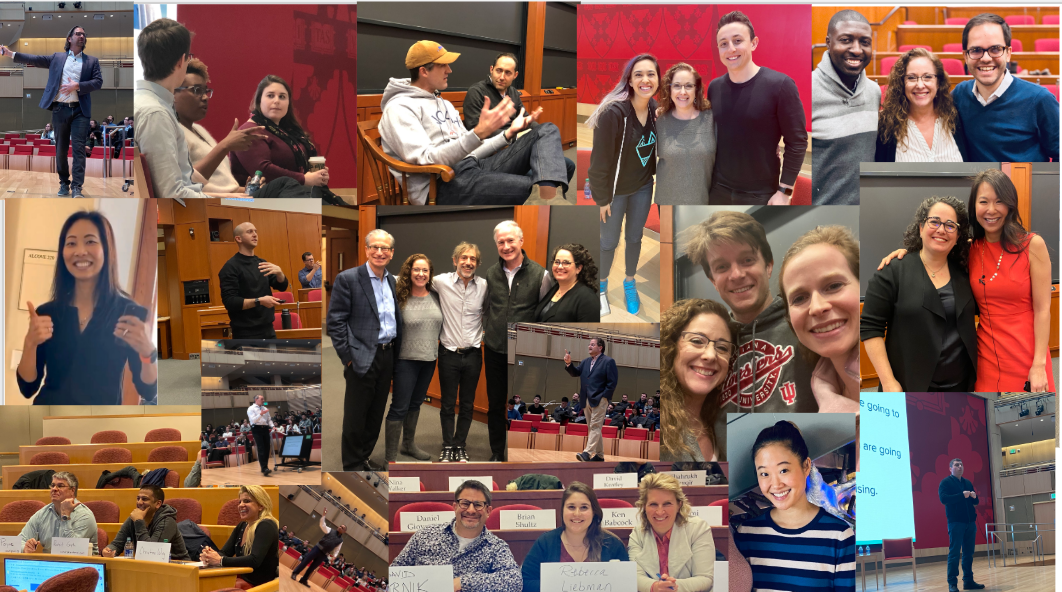
In the past few decades we have introduced more field courses to complement the case method with a learn-by-doing approach. Like our live case discussion with protagonists, the HBS field courses tap into some of the top entrepreneurs and industry experts in the world. Startup Bootcamp is no exception! In order to pull off an intense eight days of programming, we drew in over 70 guests throughout the week. These guests did everything from keynote talks and serving on panels to offering hours of coaching time and workshops. Each guest donated their valuable time, treasure (many paying their own way to travel from all over the US) and immeasurable talent to be part of this program. Our students were blown away with the level of high quality content each guest provided and all were so grateful for every ounce of insight they received on their ideas, their teams and their future as entrepreneurs, joiners of startups and members of the venture capital community.

Screen Shot 2020-01-25 at 4.27.54 PM

Tagging over seventy people is well above the maximum limit for most social media platforms, so herewith, a hearty THANK YOU to all of the guests who joined us last week. We absolutely could not have done it without you!

Gil Addo
Gideon Ansell
Henry Ancona
Berlynn Bai
Jay Batson
Eliza Becton
Edward Berk
Ethan Bernstein
Peter Bleyleben
Jana Boruta
Jeff Bussgang
Bobbie Carlton
David Chang
Chuck Collins
Maggie Crowley
Karen Devine
Brian Doll
Richard Dulude
Doug Fox
Dave Gerhardt
Jodi Gernon
Shikhar Ghosh
Rob Go
Jamie Goldstein
Samara Gordon
Sean Grundy
Rohit Gupta
Christian Heim
Jason Hines
Sarah Hodges
David Hornik
Alex Iskold
Jennifer Jordan
Howard Kaplan
Stella Kim
Melody Koh
Brendan Kohler
Tarikh Korula
Karen Korula-Young
Jeremy Kriegel
Pascal Kriesche
Elizabeth Lawler
Sarah Leary
Elise Lelon
Rebecca Liebman
Jennifer Lum
Nate Maslak
Bob Mason
Devon McDonald
Bob Moesta
Jennifer Neundorfer
Eric Paley
Andrew Payne
Melissa Perri
Mark Pincus
Amira Pollack
James Psota
Vinayak Ranade
Christina Raymond
Jeffrey Rayport
Caty Rea
Carlos Reines
Laura Rippy
Mark Roberge
Bryce Roberts
Brendan Schwartz
Javier Segovia
Shereen Shermak
Caroline Sherman
Nancy Tao Go
Satish Tadikonda
Jill Ward
Christina Wing
Peggy Yu

Finally, it takes a village to pull off such an intense program that took months and many hours of planning and an average of twelve hours a day over eight straight days to orchestrate. Hats off to my co-instructors, Allison Mnookin and Martin Sinozich for being great collaborators, to Jacey Taft and Sneha Pham for their tireless support throughout many twists and turns and to our outstanding Teaching Assistants – now second year MBA students and Bootcamp alumni – Gaby Goldstein, Jad Esber & Ollie Osunkunle. Best team ever!

Interested in learning more? Listen to what our students and faculty have said about the program in this video and check out our Instagram page!


From Zero To 100+: Preparing To Lead And Operate At Scale

gears_png_by_mariasemelevich_d7q9eje-fullview.png

Photo Credit: Maria Semelevich

I’ve had many first hand experiences with the excitement and pain of scale at companies that started out with a few founders and soared to over 100’s or 1000’s of employees. At somewhere around 75-100 employees, there is a shift with leadership, teams and individuals and it’s important to plan for it or at least recognize when it’s happening and try to stay ahead of it. I’ve written the below for the CEO/Founder of an early stage company, but most of my advice can be applied to any leader of a scaling organization, even inside a large corporate entity. 

Leadership At ~100

As a company approaches 100 employees, the reality that it’s time to let go starts to hit its founding leaders. It is simply impossible to be plugged into everything. At this stage, you now are likely managing managers and more than ever have to empower your leaders to, well, lead! They will not always do things the way you do them or as well as you do and there will always be a few select things that you must own and decisions that only you can make, but at this stage if you don’t have the confidence and the right people to get things done without you being involved, you’re in for a rough ride. In fact, it is when founding CEOs don’t learn to step up into their roles and empower their leaders that investors/board members begin to lose confidence in the founding CEO’s ability to operate at scale; these founding CEOs end up getting pushed out/replaced. Here are a few tips in areas I find to be the most challenging at this stage:

  • People: When it comes to employees, there are two areas I see CEO/Founders get tripped up as their companies grow: Hiring and People Management. I am a big believer in staying close to the hiring process for as long as possible in the early stages. In my experience, the first 10-15 employees will set the culture of your company and how you lead them will set the tone for leadership going forward. As you start to bring on more members of your team, however, you can’t hand pick every one. Here’s what I  suggest for approaching hiring:
    • First 20-30 employees – If you have inexperienced managers, review candidate resumes together and establish selection guidelines for what qualifies a candidate for a round of interviews. Be part of the interview and hiring process as much as possible to set expectations on what makes a good hire at your company (even if the hiring managers are experienced) and serve as a role model to managers who will eventually do this themselves. This is also a great opportunity for the early hires to get to know you – especially if this is their first startup – getting to know the CEO/Founder can be a recruiting super power! Also, if hiring in general is new to you, get help from advisors/investors with more experience; books like Who or The Five Dysfunctions of a Team can be helpful, but the art of hiring is a skill that takes practice.
    • 50-100 – This is a transition period where you may sit in candidate reviews for key hires where the team decides whether to make an offer or not and why. Your role is not necessarily the decision maker, but rather to offer guidance and mentorship to the team on how to decide. You may interview the candidates at this stage too, but I suggest this be to either A) help a junior manager resolve concerns they have about the candidate or probe more deeply on areas where they feel less experienced, and B) to help close a candidate and sell them on the business and its potential.
    • 100+ – Let go! If guidelines are not set at this point (manifests as bad culture or heavy voluntary or involuntary attrition), then you need to rework the wheel with your hiring team. Otherwise, it’s time to set your team free to make the right calls for their teams’ needs. At this stage – other than your direct hires – you are only on-call as needed for key hires. For example, when VMware was nearing 800 employees, our founding CEO Diane Green was on standby to interview me for the first non-Palo Alto leadership role; both to assess my abilities for the role and to sell me on taking it (and I’m so glad she did!)

      For the people management side of things, consider the following:

    • 0-20 – Early on, just like hiring for the first time, you may be learning how to manage people for the first time. Get help with this and don’t try to figure it out yourself. You will spend more working hours than you ever imagined learning how to navigate people things while running your business, fundraising, etc. Hire a coach or find friends with management experience and lean on them. Read as much as you can and listen to podcasts like Reboot or Masters of Scale. Put your ego aside! Managing is hard, never mind learning how to do it when you’re also trying to launch a company!
    • 20-30+ – The best practice for team size is eight (recently termed the “two-pizza team rule” by Jeff Bezos) . If you’re reaching a point where you have more than 8 people working directly for you or for anyone who works for you, it’s time to scale out a management team. Ideally, bring in some managers who know how to manage vs. promoting all from within. I like to build teams with a balance of each to allow growth within the company but also to have role models and mentors for those who are growing. 
    • 30+ – As you start to have managers working for you, you need to trust them as leaders of their own teams and, similar to setting the hiring guidelines, your job is to set the people-management guidelines. How does one lead at your company? How do you give feedback? How do you establish an inclusive culture, develop employees and create a great place to work? Your job is to make sure these questions are answered and managers in your organization have the support and tools (compensation/equity budgets, training, systems) to manage to these guidelines. A big mistake I see companies at this stage make is waiting too long to hire people experts – both HR and experienced recruiters who get the startup to scale scene. Money invested in these roles early will save you tons of time and money as you scale. The serial entrepreneurs and co-founders of Drift hired their lead people-person as one of their first 5 hires; they learned from past mistakes!
    • Bonus tip: Every early stage CEO/Founder I know is shocked to realize the power they wield. Even if you consider yourself to be “one of the people”, everything you say and do is more impactful that you can imagine. A simple eye roll in a meeting could make a subordinate think they’re about to get fired. A “great job” on a new idea proposal could be heard as an OK or even a directive to proceed. You are powerful and potentially dangerous! This means tread lightly. If you do skip-levels (talk to employees of managers that report to you), never be directive and use the time to listen, only. If you like an idea, tell them, but make it clear it’s something they should discuss with their manager. If you are unhappy with an employee that reports to one of your managers, bring it up with the manager and put yourself in their shoes when you think about how to help them with this employee. This can be especially hard if some of these employees used to work for you directly before you hired their manager, but just imagine if your investor or board member went straight to someone who works for you and told them to do something or that they were poor performers. How would that make you feel? Be empathetic and manage your power carefully.
  • Product: If you’re a product-centered CEO/Founder (vs. say. Marketing- or Sales-centered), the thought of stepping too far away from product details probably sounds frightening! That said, if you have to be part of every discovery session, design review and test of products or features before they release, your company will never get anything done – or learn how to do it at scale. I have seen countless teams at a standstill waiting for the CEO to review their latest product designs because she was out fundraising or handling 27 other fires that needed to be distinguished. Don’t let this happen! Here’s how to avoid it:
    • As early as you can in your company’s lifetime, articulate your company’s True North and product guardrails and evangelize it like crazy to a point where it’s in the DNA of the company. The True North may evolve as the company matures, but keeping it clear and not wavering too often is critical. When I was the CTO at DigitalOcean, our true north was to empower developers to build great software and our guardrail was simplicity. If something new was being proposed and wasn’t to help developers build great software, and/or how it was designed wasn’t simple, it wouldn’t get on the roadmap. It’s the CEO/Founders’ and their leadership team’s job to make sure this is clear to every employee, and if it changes, why.
    • Establish a high level product roadmap that extends no more than 12-18 months; you have no idea how your product(s) or the market will evolve beyond that. Keep it at the broad strokes level – major products or epics within product lines and with clear, measurable, outcomes. Your job is to set the tone at the top and at under 100 employees you can stay pretty close to the details, but once teams get bigger, you will rely on this roadmap and the measurable outcomes to both track performance but also empower your teams to execute. As the company scales towards 100+, you will shift from attending routine product meetings and reading PRDs or briefs to trusting that your team knows what to build and can map it to the high level roadmap. If the roadmap changes over time, so will their work. Just don’t thrash too much – it takes time for new ideas to flourish or major product changes to make an impact. Patience is important here!
    • Once you have a decently sized product team (20+), you must have great product leaders and designers on your team. At this point, your time will more likely spent getting customer feedback and downloading it to your team, brainstorming new ideas and/or selling what you have. It’s OK to have a passion area that you must stay close to – perhaps a new innovation or a unique, personal area of interest, but the bottom line is…let your team execute!
  • Process: Quite simply, as you scale you must focus your attention away from the how and towards the what. At less than 100 employees, you will be thinking about the how related to all aspects of the business (many noted above, but also how to manage funds, manufacturing/shipping if applicable, payroll, insurance…the list is endless!). As you scale and hire experts in these areas, the goal is to let go and empower them to decide the how. Your job is to make the desired outcomes clear. Outcomes are not just financial either – everything from the culture of your company, the reputation of your products/services, and your brand is for you to make clear. As a mom who still shudders every time one of my kids borrows the car, I like to use the teen getting their license metaphor here:
    • 0-30 employees = learner’s permit in-hand, understands the basics, but still needs close supervision/training
    • 30-75 = passed driving test, but still on probation. Can’t drive during certain hours (equivalent to making all decisions solo), still needs some oversight.
    • 100+ = capable of borrowing the car for a weekend road trip with friends. Hand over the keys!

If your leaders feel like you won’t give them the keys, that you are back seat driving, or feel that you’re monitoring their every move, you will not establish trust or allow them to move your company forward. Also worth noting, creating this type of toxic, micromanagement culture of leadership can be a large contributor to CEO/Founder burnout as you try to manage “all the things”. 

Teams and Individuals at ~100

I’m going to keep this part simple. The bottom line is that there are people on your team that will grow beautifully as the business grows and there are those who just don’t do well in a mature environment. Some tips on how to stay ahead of this:

  • DNA: I’ve seen too many talented people become poor performers once a company started to scale simply because they did not have big-company DNA or because the company did not ensure they were in roles where they could continue to thrive. Think about who on your team has real startup DNA – do they thrive with ambiguity and constant change? Are they scrappy and just get stuff done, even though it may not be polished and perfect, but keep the ball moving forward? Do they break the rules in a good way? Now, what happens as your company grows and there’s more complexity in the business and/or more structure? Will they resent the bureaucracy? Will they refuse to be managed or adopt the “special snowflake” attitude that they know better because they’ve been there longest, have an “in” with the founder or have more equity? OR…will they rise to the challenges that come with growth, respect the structure and be seen as the guru among the team? Pay attention to your early hires as they and the company grows. If you see signs of trouble, decide whether there’s a better way for them to contribute without losing them OR decide it may be time to part ways – the company has outgrown them.

    I once had a talented engineer on my team at VMware who was a great prototyper, but not very strong when it came to writing production-level code. Each time we tried to have him follow a project from experimentation to production phases, he would be miserable trying to follow a structured process and the product leads would complain constantly about his attitude and the quality of his work. I was able to carve out a prototyping role for him on my team so we could keep experimenting with new ideas and he could remain happy and productive at the company. Sometimes you can make these things work, but when you can’t, consider how much time you may be wasting trying to force a situation that’s just not going to turn around. Often, the best course of action for those with startup DNA is to go find a new startup and if you can help them get there, even better!
  • To Lead OR Not To Lead: Pay attention to first-time managers who hate (or are bad at) managing, but took on the role as your company grew. Some early hires are put into a management role because of budget/hiring constraints that hate it OR that wanted to be a leader, but were really better suited as an individual contributor (IC). Put a process in place at your company at allows upward mobility in both specialist and management tracks and allow them to move between each. Make that a positive thing vs. having someone take an ego hit or be viewed as a failure for giving one or the other a try. In the early days at VMware, we had such fluidity when it came to people trying manager roles (or stepping into one while we tried to find a permanent hire) and either thriving or deciding it wasn’t for them. No shame, they learned, and were always welcomed back as an IC – in fact, several of them from the early days are now in some of the most senior IC roles at the company. The worst is when you lose a great IC who was a bad manager. By the way, I’ve also seen great leaders try to go back to coding/IC roles with mixed success. Point is, ensure you and your team are in the right roles and are given opportunities to be excellent.
  • Cross-team Dynamics: As the company grows, not only are new teams forming and new managers leading, but there can also be cross-team dynamics that create tension in the company. Most common, product and engineering teams being misaligned or sales/marketing/support challenges. Pay attention to how these interdependent teams interact and make sure your team leaders are as passionate about how they partner and collaborate with their peers as they are about how their own teams perform. Ensure fiefdoms don’t form and resolve any rifts between teams as soon as you suspect there’s an issue. These issues can be toxic and destroy what may have been a humming organization when it was smaller.
  • Compensation & Incentives: As the company grows, so must employees’ careers, compensation and incentives. Be thoughtful about salary structures early on and be mindful that haphazardly compensating new hires early on or bumping people up to retain them will undoubtedly create a need to recalibrate everyone’s compensation down the road. The recalibration process is PAINFUL.

    Remember, employees are motivated by three major things: The work they do, the people they do it with and fair compensation for that work. Throwing money or an unearned fancy new title at an unhappy employee will not retain them if the work they do is uninspiring, if they don’t live up to the expectations of the unearned new role and/or the people they work with are not enjoyable. These quick fixes are temporary. Similarly, beer on Fridays or a foosball table in the office is not as compelling an incentive as are equity refreshes and opportunities to take part in new product work or the chance to work with an industry luminary (or letting a poor performing/toxic peer go). Consider Maslow’s Hierarchy of Needs when it comes to your employees: They need the foundational basics (a desk, computer…), they need to feel safe (steady income, a health plan), loved (great co-workers & managers) and to self-actualize (assigned interesting work, able to reach career goals, achieving wealth to reach personal goals or making a social impact).
  • Human impact of hypergrowth: Finally, people don’t always grow as fast as their companies and can easily burn out or perform poorly if you’re scaling at hypergrowth speed. The best write up on this particular topic is Khalid Halim’s post for FirstRound. I also wrote a brief piece on how hypergrowth of teams can slow down an organization, here.

Scaling a company can be both exciting and daunting. If you’ve never experienced this journey, it can also catch you by surprise when things start to go wrong. The best recipe is managed growth, with an experienced team, getting help from experts and being thoughtful as you scale.

Got other tips on managing at scale? Please share in the comments!

Setting Up Your Own Personal Board of Advisors

When I left my job at VMware, I had no idea what I wanted to do next.  I knew I wanted to work with early stage companies and I also knew I wanted to do something technical, but beyond that I was’t quite sure what the perfect role for me would be. I had just relocated my family from a seaside town to Cambridge and was in the midst of a major home renovation so I decided to focus on rediscovering the technical community in the Boston area as a first step.  What a pleasant surprise it was to me to find that while I had my VMware “blinders” on for the last eight years, the startup scene in Boston and Cambridge had exploded.  There was a new crop of venture capitalists, start up accelerators like TechStars and MassChallenge were gaining traction, and the nation was starting to take notice that Boston was a burgeoning community for entrepreneurs.  Of course, Boston’s entrepreneurial roots are strong with some of the earliest of tech companies (e.g., DEC, Data General and Polaroid) to more recent “legacy” successes like iRobot and Akamai.  Lest we forget, Facebook got its start here too.  So I don’t know why I was so surprised that another crop of greatness was brewing in this city I’ve called home my whole life.  Now, what to do?  That was the question!

Step two was to plug into the scene.  My friend Scott Kirsner, a local reporter for the Globe and entrepreneur himself (Scott started Innovation Leader as well as several important startup events in Boston like the Nantucket Conference and Future Forward), introduced me to a ton of local angels.  In turn, these angels introduced me to a bunch of entrepreneurs in the area who had either just started new companies or were looking for co-founders.  I also got plugged into TechStars and MassChallenge as a mentor.  It was through my connection at MassChallenge that I got paired with a stealth company that was working on a new way to help women grow and be retained at large companies.  Their concept was to systemically organize an advisory board for high-potential (HP’s) employees via a Match.com kind of algorithm.  Seasoned employees or members of the program outside a company would sign up to advise HP’s based on certain expertise they could offer and the HP’s would create goals that matched to these expertise.  The hope is that by having the right experts assigned as a “board” to these HP’s, they were more likely to grow at their company and therefore have a longer tenure.

I liked this concept a lot and thought about how everyone should have a board like this – no matter what stage their careers were in – and that’s when my personal advisory board idea came to light.  I decided that before I could start my next gig, I needed a solid group of people to serve as my advisory board.  My requirements for this board were as follows:

  • I needed a mix of seasoned professionals who were technical and business savvy to give me sound advice from each angle.
  • A wanted a range of people from those who knew me really well personally and professionally for very directed advice to those who I had just met who could be completely objective.
  • Finally, I wanted a mix of men and women to ensure I had a diverse set of opinions – ideally, a group of 6 with three of each.  [That was harder than I had hoped, so I settled for a 4:2 ratio and eventually added a seventh member…another (awesome) guy.]

Once I decided the criteria for my board, I then wrote a one-page business plan for me.  Not for a new business or opportunity, but for what I wanted to do to in my next phase of work.  I kept it really high level in terms of the type of work I wanted to do (at the time, mostly advising and investing in startups) and what I didn’t want to do (work with jerks or be a “consultant”).  Then, I set guidance for my Personal Board of Advisors (PBA) in terms of how I wanted to leverage them:

  • Guidance on companies and individuals to work with.
  • Assistance with defining the work goals and objectives per engagement.
  • Introductions to key people.
  • Occasional direction and advice regarding specific engagements.

…and how they could leverage me:

  • Opportunities to improve their and their network’s investments by lending my advice, coaching, etc.
  • Good karma for paying it forward
  • Good fun and conversation!

I also included some Rules of Engagement:

  • All conversations between Julia and the PBA and its members are confidential.
  • PBA members who are investors in some way, must be willing to wear independent hats. Unless Julia is working on one of their investments/potential investments, all information exchanged will be only as it relates to the work with that company/individuals.
  • Full disclosure if there is a potential conflict with other PBA member companies/investments.
  • Open and honest feedback is expected and encouraged.
  • While not required to disclose all engagement details, Julia will provide periodic updates on her work to the PBA.
  • There’s no term to the PBA membership, but ideally this is the start of a long-term relationship between Julia and a fabulous group of people!

Scott Maxwell, Steve Herrod, Andy Palmer, Michael Skok, Paula Long, Antonio Rodreguez, & Katie Rae

Feeling lucky to have this group advising me!

The net result of setting up my PBA was better than I ever expected.  I have seven amazing individuals who I can go to when I need advice whether it’s for a specific project I’m working on or just career advice in general.  I feel like they have my back and I absolutely have theirs.  I have since collaborated with some of them on specific projects and several have reached out to me to connect with people who could use my help or advice or to help them with a project they’re working on directly.  I never had a PBA meeting (we tried to do a lunch once, but they are all so busy it was impossible to get everyone together!), but I don’t think it is really necessary.  They each know each other in some way – some better than others – and there’s no competition/tension between them (that was lucky on my part!), but the real benefit is the 1:1 time I get with each of them on demand.  Sometimes a quick text or email, sometimes a lunch or a cup of coffee. I know they are each willing to help me out whenever they can and that made a huge difference for me as I immersed into the local tech scene over the past year.

I had a great year getting to know the startup community in Boston and have since taken a permanent position at Blade as an EIR.  You can read more about that here.

Thinking about setting up your own advisory board?  Comment below with questions about how best to set one up!  Or share experiences you’ve had doing the same.

Learning WordPress and Speaking My Mind

It’s time I learn how WordPress works and also give myself a forum to share my thoughts, insights and ideas.  

What I’ll write about…

I think about a lot of things all the time.  From how things work – robots, apps, the human mind and body – to what’s going on in tech, leadership, innovation in corporations, new paradigms for education, healthy living and saving the world.  I have very strong convictions about BeingFA and will reference this term a lot (thanks @Julien).  I am also a huge advocate of woman leaders, women in tech and strong independent girls (I am biased, I have three of them…).  I love to paint, but never seem to have the time so I use photography as a creative outlet.  So, you may see some cool photos here once and awhile.  I am also a travel addict. My bucket list of destinations is endless and I’ll likely share thoughts on cities I’ve visited and provide helpful tips – I am an anti-tourist, so always look for new perspectives when on the road.

My public face….

I share my professional self with some bleed into personal life on Twitter.  My LinkedIn profile can tell you a bit about my career – eclectic, but trending towards entrepreneurial tech – and I only use Facebook for people I’d cross the street to say “Hi” to (nod to @sefk for that guidance) so don’t try to “friend” me unless you think we’d be happy to see each other in a random bump-in.  

What I’m up to…

In the past year, I quit my job, renovated a 19th century brownstone and moved from deep in the oceanside suburbs to the beautiful city of Cambridge.  I’ve been surveying the tech startup landscape of Boston and Cambridge and boy am I excited about what’s going on!  I hung out at TechStars Boston for the Winter 2014 class as a mentor in residence and got to know a ton of amazing people.  I set up my own advisory board which I’ll blog about soon and I dabbled in my first angel investments – tons to learn there!

I’m now digging into a few new projects that are warming my brain back up in areas that have had a nice vacation. Once I settle into things a bit more, I’ll share what I’m really up to.  Meanwhile, look for ponderings as they come and feel free to reach out if you want me to share my thoughts on a particular topic.  I’m never shy about my opinions or lessons learned.

Happy reading!