So You Want to Be A Product Manager

Because I teach a course on Product Management at Harvard Business School, I am routinely asked “what is the role of a Product Manager?”. The role of a Product Manager (PM) is often referred to as the “CEO of the Product”. I disagree because, as Martin Eriksson points out, “Product managers simply don’t have any direct authority over most of the things needed to make their products successful – from user and data research through design and development to marketing, sales, and support”. PMs are not the CEO of product and their roles vary widely depending on a number of factors. So what should you consider if you’re thinking of pursuing a PM role?

As an aspiring PM, there are three primary considerations when evaluating the role: Core Competencies, Emotional Intelligence (EQ) and Company Fit. The best PMs I have worked with have mastered the core competencies, have a high EQ and work for the right company for them. Beyond shipping new features on a regular cadence and keeping the peace between engineering and the des

ign team, the best PMs create products with strong user adoption that have exponential revenue growth and perhaps even disrupt an industry.

Screen Shot 2017-10-31 at 1.44.18 PM

Do you have what it takes to be the best PM?

Core Competencies
There are core competencies that every PM must have – many of which can start in the classroom – but most are developed with experience and good role models/mentoring. Some examples of these competencies include:

  • Conducting customer interviews and user testing
  • Running design sprints
  • Feature prioritization and roadmap planning
  • The art of resource allocation (it is not a science!)
  • Performing market assessments
  • Translating business-to-technical requirements, and vice versa
  • Pricing and revenue modeling
  • Defining and tracking success metrics

These core competencies are the baseline for any PM and the best PMs hone these skills over years of defining, shipping and iterating on products. These PMs excel at reflecting on where each of these competencies contributed to the success or failure of their products and continuously adjust their approach based on customer feedback.

Emotional Intelligence (EQ)
A good PM may know the Do’s and Don’ts of a customer interview, but the best PM has the ability to empathize with customers in that interview, are tuned into their body language and emotions and can astutely suss out the true pain-points that their product/feature will address. A PM with a high EQ has strong relationships within their organization and they have a keen sense of how to navigate both internal and external hurdles to ship a great product. Here’s a deeper look at how the four EQ key traits, as defined by Daniel Goleman, relate to the PM role:

  • Relationship Management: Probably one of the most important characteristics of a great PM is their relationship management skills. By forming authentic and trustworthy connections with both internal and external stakeholders, the best PMs inspire people and help them reach their full potential. Relationship management is also vital in successful negotiation, resolving conflicts and working with others toward a shared goal which is especially challenging when a PM is tasked with balancing the needs of customers, resource constrained engineering teams and the company’s revenue goals.

    Authentic and trusting relationships within an organization can lead to more support if additional funding is needed for a product or to sway an engineer to include a quick bug fix in the next sprint. Outside an organization, these skills could encourage existing customers to beta test a new feature for early feedback or convince a target customer to try the MVP of a product still in stealth mode. These relationship skills can also be what makes the difference between having irate customers because of a bug introduced into the product and those who say “no worries, we know you’ll fix this!”. 
  • Self-awareness: PMs must be self-aware to remain objective and avoid projecting their own preferences onto users of their products. If a PM is in love with a feature because it addresses their own pain points (PMs are often super users of the products for which they are responsible), they may cause a user to say they love it too just to please the PM (“False positive feature validation”). If not self aware, a PM may push to prioritize a feature they conceived even when all the customer interviews and evidence is stacked against it. This lack of self awareness could derail more important priorities and/or damage the PM’s relationship with engineers who may lose confidence in their PM when the feature isn’t readily adopted by users. 
  • Self-management: Being a PM can be incredibly stressful! The CEO wants one thing, the engineering team another, and customers have their own opinions about feature priorities. Managing tight deadlines, revenue targets, market demands, prioritization conflicts and resource constraints all at once is not for the faint of heart. If a PM cannot maintain their emotions and keep it cool under pressure, they can quickly lose the confidence of all their constituents. The best PMs know how to push hard on the right priorities, with urgency, but without conveying a sense of panic or stress. These PMs also know when to take a breath and step away if needed, regroup, and go back into the game to get sh*t done (GSD). 
  • Social Awareness: According to Goleman, the competencies associated with being socially aware are Empathy, Organizational Awareness, and Service. PMs must understand customers emotions and concerns about their product as much as they understand the concerns of the sales team on how to sell that product (or support team to support it, or engineering to build it). PMs have to have a deep understanding of how the organization operates and build social capital to influence the success of their product – from obtaining budget and staffing to securing a top engineer to work on their product. Finally, social awareness ensures the best PMs service their customers with a product that addresses their jobs to be done which is ultimately what drives product market fit.

Read more about what Paul Jackson has to say about EQ and PMs here – including a sub-link of an interview with Sam Lessin, former VP of Product Management at Facebook, who says he has ‘never successfully trained empathy.’ (or as Lady Gaga would say “you were born this way”…or not!)

Company Fit
So if the best PMs have well developed core competencies and a high EQ, does that mean that they are then destined for success no matter where they work? Going deeper, it is taking these skills and personality traits and applying them to the right company – amid a broad array of opportunities – that will ultimately guarantee success.

I have yet to see a standard job description for a Product Manager because each role is ultimately defined by the size, type of product, stage, industry and even culture of the company. Assuming the core competencies and high EQ as the minimum requirements, the next step is to unpack who’s hiring and what they are truly looking for:

  • Technical Skill – The type of product, who uses it and/or the type of company (e.g. Google who requires PMs pass a technical skills test regardless of what product they’ll work on) will determine how technical a PM needs to be. If the company is building a SaaS CRM, there may be more requirements for experience with go-to-market and customer lifecycles than how the product itself is built. If it’s a data science product with machine learning algorithms and APIs, the role may require a lot more technical depth to not only understand how to build the product but also how to talk, credibly, with the customers who will use it. That said, having a basic technical understanding of what is “under the hood” and mastery of the tools that PMs use is definitely important for the role, anywhere. Colin Lernell has more to say about these necessary skills here.

    If you are an aspiring PM concerned you lack the basic tech skills for the role, you might consider taking online courses such as the renowned Introduction to Computer Science (CS50) course offered by Harvard University or one of the many intro and advanced technology courses offered by The Flatiron School. 
  • Company philosophy about PM – Every company has a different philosophy about the product development process and where PMs fit into that process. Below are the three most common types with pros and cons:

    • PM Drives Engineering: A “throw it over the wall” approach where PMs gather requirements, write the quintessential PRD (Product Requirements Document) and hand it off to Engineering to spec out the technical requirements. Contemporary organizations may do this process in a more agile and collaborative way, but the expectation is that PMs know best about what customers need and engineering is there to serve.
      • Pro: Engineering can focus on coding without a lot of distraction; tends to work well for Waterfall development shops with long lifecycles.
      • Con: Engineers lose sight of the big picture and do not develop empathy for customers which can lead to a poor user experience; often there are unhealthy tensions when tech-debt and “plumbing” work needs to be prioritized against customer requirements. 
    • Engineering Drives Product: More technically oriented product companies (e.g., cloud, big data, networking…) tend to be engineering driven where engineers are advancing the science in their domain and PMs validate solutions or create front end access points (UIs, APIs) to tap into this new technology. There can be a collaborative relationship and feedback loop between customers, PM and engineering, but typically, PMs are serving engineering in these companies.
      • Pro: Breakthrough technology can offer customers things they didn’t even know they needed (VMotion at VMware was a great example of this. An engineer thought it would be cool to do, a PM figured out how to monetize it and it became THE billion dollar game changer for the company).
      • Cons: Engineers chase the shiny new thing, over-architect the solution or iterate forever (seeking perfection) before getting customer feedback; PM input on priorities are ignored, which is sometimes the most basic needs of customers to encourage adoption and increase stickiness of the product.
        Screen Shot 2017-10-31 at 10.52.40 AM
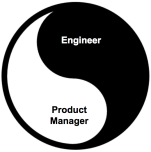
    • The PM<>Engineering Partnership: There is a strong yin-yang between PM and Engineering where there is joint discovery, decision-making and shared accountability. Engineers join PMs in customer interviews and PMs are insprint meetings to help unblock tasks or bring clarity to  requirements, but the two roles respect the line where one starts and the other stops. PMs understand what’s being coded, but don’t tell engineers how to code and engineers have empathy for customers’ needs, but leave the prioritization to the PMs.
      • Pros: Streamlined prioritization process that values tech-debt/plumbing projects; better design processes leading to a more positive user experience; higher performing teams with improved product velocity, quality and typically, happier customers.
      • Con: Breakthrough innovation may not get light/investment; time-to-market may seem to lag (but I’d argue what’s released is far better aligned with customer needs with a far more scalable product).

I’m clearly biased (as is Fred Wilson) on the third type of philosophy about PM as I’ve experienced all three and found the yin-yang to be most effective, but it’s not to say the others are notably bad and, again, it really depends on what type of product, stage, etc,. Regardless, when considering a PM role, the philosophy of PM at the company could be the deciding factor on fit for the role.

  • Stage of company – The role of the PM at a startup is far likely to be responsible for “all the things” vs. a mature company where their role will be more distinctly defined. Eriksson, Banfield and Walkingshaw’s book Product Leadership has a section that has a lot more detail on this topic).

    • Startup: Beyond discovery, definition and shipping, they may also be responsible for pricing, marketing, support and potentially even sales of the product. These PMs thrive in a scrappy environment and are comfortable with ambiguity and frequent changes to direction as the company works towards product market fit and learns to operate at scale.
      • Pros: Likely to be more involved with company strategy, exposure to senior leadership/board, able to take more risks/make a bigger impact; more influence/authority over company resources.
      • Cons: Little-to-no mentorship or role models or best practice within the company (may have to seek externally); may not have requisite experience for some of the “things” (comfortable winging it); tight budgets. 
    • Mature Company: The PM may have a more narrow scope (deep vs. broad), have co-workers who handle pricing, go to market strategies, etc.. and likely part of a larger team of Product Managers.
      • Pros: More likely to have mentoring/role models and development standards/best practice; close association with an engineering team can develop strong relationships over time (great for long term impact/career growth); if product has market fit, there is an established customer base and performance baseline to work from vs. guessing until you get it right.
      • Cons: Less exposure to company strategy; just one of many voices of the customer; can get “lost” in the system; more politics; tight budgets. 
  • Founder/CTO/CEO relationship with PM – Especially in earlier stage companies, it’s important to know how involved the Founder/CEO/CTO is in the product process. If they are deeply involved, the PM role may play more of a support role to flesh out their ideas or validate concepts with customers vs. conceiving and driving ideas of their own. This can be great fun for some PMs who enjoy partnering with founders/c-levels and collaborate on the product evolution, but for some PMs it can be very frustrating if they prefer to take more ownership of product direction. It can also be challenging if the more technical founders/c-levels prefer working directly with engineers. This can leave PMs out of the loop or undermined (even if unintentional) causing not just personal frustrations but delays if they have to play catch up and/or continuously recalibrate. When considering a PM role that may work closely with the founding leadership team, be sure to find out their expectations of the PM function and decide whether this is the right fit with your interests.

There are of course many other factors to consider for any role such as the type of product you are building (B2B, B2C, industry, etc.), the humans with whom you’ll work and the overall company culture (diverse, inclusive, flexible work hours, remote culture, etc.), and of course compensation and benefits. There are also a million articles on hiring product managers to get perspective on what the hiring managers are looking for – I especially recommend my friend Ken Norton’s piece How to Hire a Product Manager. However, if you are striving to be the best Product Manager, consider all of the above before signing on to your next gig. Developing core competencies will be an ongoing activity throughout your career and leveraging a high EQ will ensure a more positive experience, but where you work, how they work and who you work with/for will ultimately determine your long term success.

Have additional pointers on succeeding in the PM role? Please share in the comments!

Is The Future Bright?

COEXIST-Final-800px

My dad was a science fiction buff, Democrat and a WWII veteran. As a single parent, he did a marvelous job inspiring me to explore my interests in technology and encouraging me to be my own person with the strength and means to create the life I wanted to live. We were “not that Jewish” in terms of rituals and convictions, but our heritage and suffering was always a thread throughout our lengthy family debates about politics and the world at large. Being a Jew was part of who we were as individuals and as a family and his role in the war and the stories he told from his experience was a constant reminder of how important it is to stand up for what’s right, defend minorities and protect our freedom.

I often have days where I wish my dad was still with us so I could see his mind explode when I showed him the latest in tech. An avid Azimov reader and Star Trek viewer who bought every single new calculator (the first one was a Sharp CS10A weighing over 50 pounds!) and Radio Shack TRS80 as they were released, he would have totally lost it if he were to see the iPhone and all the applications one can use on it today. If I were to share a VR headset with him or bring him to an AR installation, he would marvel at how the technology he imagined from all his Sci-Fi reading was coming to life. He would have also said none of it surprised him, because he believed all of it was inevitable. The future was always bright in his mind.

Despite all the progress we’ve made in tech in the US since my dad’s passing in 2009, we’ve had a lot of regression in the country at the same time. I imagine how my dad would feel today about our current President and the rise of hate and bigotry in this country. I imagine how he’d feel to see women continue to deal with discrimination and adversity; where inequality still exists across industries, across the nation. As a Jew, I imagine his disgust at some of the unimaginable things that have happened in our country in the most recent weeks. I imagine that he would not think the future’s so bright right now.

I am not a political activist. In fact, I refer to myself as “A-political, ‘A as in anti'”. I do vote on the regular and keep an eye on important bills being passed, but until recently, I’ve tried to avoid the topic as much as possible. Today however, I am embarrassed for our country and ashamed at myself for not doing more. As I read my twitter feed, I take pleasure in seeing the lack of fear in calling out our President for being ignorant and crass. We are very lucky to live in a country where we can be so vocal without recourse. But I fear we may not have those rights much longer if we allow things to persist. I am now challenging myself on what I personally, as an apolitical non-activist, can do to support our country getting past all of this.

I plan to start by surrounding myself with good humans who care deeply about these issues and have a zero tolerance for hate and bigotry. I will only work with and for organizations where they stand by these same beliefs (I am proud that my employer* has recently committed to standing against hate and violence). I will ensure that whomever I work with, mentor, or coach knows that I will always focus on creating a safe space for them to thrive, speak their minds and be supported – no matter how they identify (race, gender, religion or otherwise) as long as they reciprocate. Finally, I will do what I can to support those on the front lines trying to make our country a better place. I may not run for office or join a picket line, but I will speak up more about the issues, fund programs that are allowing us to make progress on equal rights and social justice (I donated yesterday to https://www.splcenter.org/), sign petitions, and encourage others to do the same. Anyone and everyone can make a difference in some way. We cannot just sit back and watch this happen.

So, Dad, if you’re watching what’s going on right now from wherever you are, please send good vibes and support us any way you can as well. Change won’t happen overnight, but I believe the good people of this country will push hard to turn things around and once again, the future will be bright.

Got other ideas about ways those of us who are apolitical can make an impact? Please share in the comments!

*UPDATE: @DigitalOcean has recently created a site to also foster donations to SPLC as well! Go DO!

Opening Doors & Taking Action

open doorsAs the news unfolded in the past week over Susan Fowler’s recent blog post about her experiences at Uber, I have been thinking deeply about finding my voice on the matter. I recalled the countless times I had been harassed and never said a thing to anyone, let alone the HR rep at whatever company I was working at the time. I have dozens and dozens of stories of inappropriate, sexually charged, comments from colleagues, winks, suggestive touches, crass jokes, and pictures shared with me that I wish I could unsee. I never called them out.

Fear of gaslighting – being accused of being oversensitive, crazy, blowing things out of proportion – is probably one of the top reasons for not reporting the umpteen incidents employees experience in the workplace. It seems no matter how high we climb the corporate ladder, we still hold back. Whether it’s gaslighting, possible retaliation, or as in Susan Fowler’s case, being totally ignored, we doubt we will be heard.

On those rare occasions when we are heard, those who fall victim to bad behavior or blatant harassment are often “handled” quietly, if at all. Issues are swept under the rug before anyone knows. So, regardless of whether the bad actor gets a warning or more severe action is taken, no one else learns from this lesson. Organizations and leaders desperate to protect their reputations and avoid litigation make it go away a fast as possible. Perhaps those who helped “clean it up” get a reality check, but as long as there is no exposure, no public shaming, no admission of guilt, we will continue to see situations like Ms. Fowler’s persist.

It was a bold move for Ms. Fowler to publicly share her story about Uber and its leadership team’s lack of attention towards her situation. The ubiquity of Uber, and attention the company is already getting in other forums, certainly gave fuel to this issue, but this is not just about tech companies gone bad. It was a rallying cry for leaders at any company, big or small, to not only open the doors for employees to be heard, but to make it clear that crossing the line is no longer tolerated and when it is crossed, action is taken.

Opening Doors
Building a culture of open doors is not just about telling employees “my door is always open,” but actually opening that door. We had a thoughtful series of conversations on this topic at DigitalOcean (DO) over the past week. At our company all hands, we emphasized a zero-tolerance for any harassing behaviors that make our employees feel unsafe and our CEO and I both committed that, while we want people to talk with their managers and our People team first, we are 100% available to talk with any employee who is uncomfortable and prefers to talk with either of us about any issue.

Our commitment to our employees this past week has been well received, but executives making statements about their open doors is only part of the equation. Opening doors is also about ensuring a safe and inclusive work environment by proactively mitigating issues. Ensuring a safe work environment involves everything from setting policies and guidelines to conducting cross-company training beyond the online course we are required to click through when we start a new job.

studentdiscussion_250One of my former employers offered a training using situational role playing to develop understanding and empathy for those who may not appreciate the severity of certain actions. It was an invaluable exercise and we do something similar with the unconscious bias training we provide to all new employees as part of their on-boarding at DO. We’ve found by raising awareness of these behaviors in realistic settings we can do a lot to set clear expectations on what acceptable and unacceptable is, and make people more aware of their impact on others.


If you see something, say something.
Despite proactive efforts, open doors, trainings and policies, harassment still happens. Sometimes, it’s an innocent mistake where a young/inexperienced employee just doesn’t realize they’ve said something wrong. Sometimes, it’s an experienced executive who’s never been called out thus doesn’t appreciate the impact of their behavior. Regardless, we cannot stay silent.

I believe every manager is accountable for reporting any incident that they observe or is reported to them as soon as possible. I also believe it’s every employee’s right to know that their company is taking action to ensure a safe workplace. However, because of corporate policy and privacy protection, we often lack the transparency of how organizations are handling situations and whether they are operating a safe place of work. We cannot, for many reasons, publicly call out every person who crosses a line, but there could be methods(*) to get ahead of this such as:

  • Providing a safe forum for any employee to report an incident they’ve experienced or observed.
  • Tracking anonymized incident data to look for trends including frequency of issues and resolution timeframes.
  • Implementing and broadly communicating Employee Assistance Programs (EAPs) that provide hot lines, advocacy and legal counsel.
  • Internal or even public communication on a company’s performance regarding harassment situations. Imagine a world where companies own unfortunate situations and say how they are resolving them and share improvement data. Scary as that may sound, I bet that if more companies shared this information, the trend of incidents would go down.

The beat goes on…
Whether it was in Twitter or in an intimate setting among friends, Susan Fowler’s story is not the first we’ve heard like this nor will it be the last. We need to continue to bring these topics front and center and commit to continuous improvement in the workplace. I’d love to hear how other leaders are handling this topic at their companies. We all benefit from learning from each other, so please share your stories in the comments.

(*) These are just suggestions, I leave the real policy and program design work to the experts 🙂

The CTO to VP Engineering Fork

bfa_code-fork_simple-black_512x512

[This blog was first posted in 2016, updated in 2018 and in 2020]

There comes a time in every scaling tech start-up’s life when an engineering team begins to show signs of needing help. The symptoms can include lost velocity in releasing new products/features, attrition or morale issues, fragile code or lack of innovation. I frequently hear CEOs and founders say “we need a new CTO” or “should we hire a VP of Engineering?”. But what does that really mean? A title is one thing, but the skills necessary to cure the symptoms is a whole other challenge.

Most tech startups have someone serving as CTO — whether it is one of the co-founders or a first senior hire. The role of the CTO is not straightforward and as a company scales, it’s unreasonable for that role to be the end-all-be-all. In the early days of a startup, the CTO is often the chief cook and bottle washer for all things technical. She is coding, serving as the de facto IT person and project manager as well as meeting customers alongside the CEO and helping with hiring decisions. She is expected to be deeply technical and often a domain expert. Firing on all of these cylinders may meet your company’s needs in the short-term, but quite often, there reaches a point where your CTO is no longer being excellent at what they came to your company to do.

In my experience, there tends to be two types of CTOs that evolve as a company grows:

The Evangelist — The shameless promoter of your product, this CTO is out on the road meeting prospects, existing customers and partners and marketing your product. At the same time, they are gathering valuable insight into your product, its pain-points and understanding how it compares to the competition. They are mindful of industry trends and the ecosystem of which your product belongs. They are the ultimate voice of the customer and are keenly aware of the product priorities. They set the vision for the “.next” of your product and the long-term roadmap. They may have once been a coder and understand the basics of your technology architecture. They can go head-to-head with other technology leaders in your space and represent your company at technology conferences. They also tend to be a recruiting magnet for engineering talent.

This CTO works hand-in-hand with the CEO and sales and marketing leads to set the strategy for the company — from market direction to the operations and scale of the business. They are financially savvy and comfortable presenting to and working with your Board of Directors.

The Expert — Often a domain expert or technical guru, this CTO is heads down with your engineering team ensuring your products are built to perform at scale. They may code, sit in code reviews, and mentor junior engineers. They are either designing your underlying architecture or at the very least leading that conversation and signing off on proposed plans. Also talent magnets, they attract senior engineers who wish to learn from this CTO’s experience. They may be key contributors to the open source community, prolific in filing patents, publishing technical papers and speaking at technical and academic conferences. While they enjoy meeting customers and value the insight from those meetings, they prefer more intimate meetings with technical members of customer teams and whiteboard sessions to brainstorm solutions vs. “selling” your products.

This CTO works closely with the sales and support team and often leaves the company strategy and growth discussions to the CEO and other leaders of the organization. They have an opinion on where the company should go, and they’re not afraid to share that, but they leave the details up to “management”.

In both cases above, it’s rare when one of these types of CTOs is also a master at execution. This is when it is important to have a VP of Engineering (VPE). While a VPE can often be someone who can serve as a voice of the customer, be a technical expert and/or represent the company in technical forums, the VPE’s focus is on GSD. Key characteristics of a VP of Engineering that can often differ from a CTO are:

  • Process oriented — highly organized around priorities, velocity, quality and meeting deadlines. They have strong project management and communication skills.
  • Great at hiring — pattern matching skills for not just technical expertise, but for people who are collaborative and mission-driven. Knows how to ID the prima donna engineer from the eager-to-learn engineer and when to say “no” even with a great looking resume. Being additive to the team is paramount to success.
  • Great at growing their team — this isn’t just about about going from 10 to 40 or 100+ engineers. This is about career development. They’ve got a track record for bringing junior engineers into an organization and developing them into technology leaders and domain experts. Their former engineers have followed them from company to company because they are great to work with. They know how to have fun, but also how to appropriately push a team towards meeting a deadline with urgency and not burn them out.
  • Challenges the status-quo — they won’t just keep building what the co-founders started, but will question both the what and the how. They understand the impact that technical debt can have on the long term scalability of your products. They also know how to tune processes without slowing the company with process. They are motivated to deliver products and features that customers not only need, but love. They partner well with their PM colleagues and both respect and appreciate the inputs from outside engineering (sales, support, the CTO…).
  • Not afraid to get their hands dirty — they lead/attend code reviews, can code if there is an emergency, enjoy tinkering with competitors’ products to understand advantages/challenges of your own products, and appreciate the fine art of squashing bugs. They come in early and stay late when there’s a deadline — even if it’s just to make sure engineers are getting food and coffee.
  • Strategic thinker — while a VP of Engineering may not be at the the table deciding the long term strategy of the company, they are part of the discussion. They understand tradeoffs of time-to-market vs. quality and value the need to get a MVP out the door to garner customer feedback early on. They may push for a product, feature or carving out time to catch up on tech-debt, but also respect the larger vision of the roadmap and know when to let go of something that isn’t a priority — in fact, the really good VPE’s kill things sooner than a CTO or CEO may like for the sake of velocity and GSD.

When you’ve decided it’s time to fork that technology leadership role and have both a CTO and a VPE, look for someone eager to create a partnership who prefers to lean into GSD and growing teams and who values the technology leadership, vision and evangelism of your CTO. That person may be a strong leader within your engineering organization or you’ll have to recruit for the position. If recruiting from outside of your company, be leery of career CTOs who seek a role as VPE at your company — they may say they’re willing to be in charge of GSD, but could struggle to partner with your CTO. Look for examples of their past engineering leadership roles as managers or tech leads. Have their former employees followed them to different companies? Also look for measurable achievements like improved velocity rates, quality improvements or hiring/team development metrics. Those are telltale signs that you’ve got a solid VPE candidate.

Sometimes it takes a lot of soul searching for a founding CTO to realize they’re not serving the company well around VPE-types of activities. I’ve seen plenty of CTOs worried that with a VPE on board, they’re not sure what’s next for them at the company. I’ve also seen CTOs excel when partnered with a great VPE where they can set the vision and execution strategy in tandem. Similarly, I have seen companies bring in a great CTO when their current head of engineering is just not ready for or interested in that role (internal or external facing). It can be a great mentoring opportunity for the head of engineering and/or allows them to keep focusing on GSD.

One more thing to consider (added in 2020): Whether they more closely associate with the Evangelist or the Expert, CTOs can also be great leaders of VPs (Engineering, Product, Design, etc.). They can “glue” these teams together to ensure that the vision and execution of products move well together. These CTOs can also serve as bridges to other teams — fostering healthy working relationships with support, sales, marketing, etc.. However, not every CTO is (or wants to be) a great people/team leader, even at a higher and more strategic level. In these situations, VPs may be better served by reporting to CEO or COO. When the organization is designed this way, the CTO would typically report directly to the CEO and could still have a team of individual contributors (architects, scientists, mini-CTOs) report to them if the need/desire arises.

Have you struggled with the CTO to VPE fork? Share your experience in the comments!

Visualizing Mile 26

Boston Marathon

“I don’t know how you do it” seems to be the comment du jour these days. I think it’s a compliment most of the time – an appreciation for everything I have taken on – but I do get this little jab in my brain when I hear it and it makes me wonder if I am insane.

I have a lot on my plate, that’s true. I am the CTO at a growing tech company in NYC, I teach a very hands on course at Harvard Business School in Cambridge. I have three daughters – one college kid in NYC, and a freshman and senior in high school (that’s right folks, college application season, round two!) – and two cats (one of which has a chronic disease requiring daily meds). I manage my household solo (yep, I’m a single mom) and I advise a few companies, coach a few rising stars and sit on a couple boards. Oh, and I occasionally blog.

What?

Ok, so I have taken on a lot, but I simply LOVE everything I do and I make it work by visualizing Mile 26.

I have never run a marathon, but I did the 26 mile Walk for Hunger many years ago with two of my BFFs. I remember being at mile 24 that day and thinking “oh my God, two more miles?!”. I had practically lost my mind because my feet hurt and I was tired and hungry, but instead of throwing in the towel, I just powered on and ran the last 2 miles and left my two friends in the dust, aghast. I had committed to this thing and I wanted to reach mile 26. It was for a good cause and my feet would feel better a week later.

Our lives will always have peaks and valleys. There were many sleepless nights when each of my girls were newborns that I thought would never end. By child three, when I had some experience under my belt, I got through those hard days of barely having time to eat, let alone take a shower, by visualizing Mile 26. The time would come when they’d all be sleeping straight through the night and the days would come when I had to drag them out of bed for school! I was close and I could make it to the end of this phase – Mile 26.

We also have to constantly recalibrate our priorities. When my Dad had major heart surgery back in 2001, I was running Engineering at a tech company and I had two little girls at home. During that time, my mile 24 was several weeks of a daily drive from work to the hospital to home to keep all the balls in the air. I missed many dinners and bath times with the girls, and my work suffered a bit, but Dad was a priority at that time. He eventually was back to himself and under good care at home – Mile 26 – and I was back to having dinner and splashing in the tub with the girls.

I’m not the only one trying to balance so much at once, so here are a few tips and tricks I use to keep it all together (most of the time) that others may find useful:

Give yourself permission to let stuff slide and get help
The school months are my most hectic time of year with many mile 24s (think: 90 degrees and humid running up a hill after 23 miles). I visualize many Mile 26s during this time, like holiday breaks, scheduled trips and the summers when school is out. During these killer mile 24s, I let some stuff slide like that growing pile of clothes I should really get to Goodwill or cleaning out the refrigerator (petrified clementines are cool). I may skip an evening networking event in favor of sleep or to catch up on work and I get help when I need it for errands, home repairs and cleaning (thank you InstacartTaskrabbit and Handy!).

Say “No”, but offer an alternative
As my career has progressed, I get a lot more requests of my time outside of work. I love paying it forward whenever I can, but my cycles are few and I am getting better at saying “no”. I’m flattered by every ask for advice, to speak or to attend an event of some sort. I wish I could do all of it but over the years I’ve learned to become more selective about what I say “yes” to. Whenever I have to say “no”, I try to find an alternative for the requester. Someone else who could coach or speak or attend the event. I find it not only gets me off the hook, but it usually ends up being a great experience for the alternate and very often the requester is quite happy with the result. It’s great when these situations turn into a win-win.

Block time off to GSD
I routinely block off time to make sure I can get stuff done (GSD). Sunday mornings are my most productive times – because #teenagerssleepuntilnoon. I focus on cleaning up my in-box and getting prep work done for the coming week. I have help at work with my calendar, but I do all of the personal stuff myself like making doctor appointments or coordinating carpools. I maximize driving/Uber time for that sort of stuff. It’s important to me that I stay plugged in and not offload everything – especially most things to do with my girls – and there’s something satisfying about getting out of the car and feeling like I just knocked a few things off of my to-do list – mini mile 26s!

[If Applicable] Respect your kids – you only get to do this once
My mile 24 life has taught my girls to be highly independent which is not so bad! They can make themselves meals, do their own laundry and help around the house (ok, with some prodding). That said, I make sure we have dinner at the table together a few nights a week and we have a no cell phone rule at meal time so we can actually talk with each other face-to-face.

I keep an open line of communication for my kids to voice when they need me for anything or feel like my crazy life is not in sync with theirs. When I’ve got a lot going on in a given month, we have “family meetings” where we make sure their priorities for me are in check. For the theater geek, I have a minimum number of shows I must attend (I usually make all of them, tyvm!) and for the sports kid, I have to attend at least two games a season – home or away. I get quality time with my big kid in NYC (perk of the job!) and thank God for texting and social media where we all stay connected probably more than my parents did with me when I was their ages! From Instagram, FB and snapchat to our “My3girlz” text stream that’s endlessly entertaining and annoying 24×7, we are in constant communication.

Take Care of Yourself
If I’m not ok, no one in my life is OK. I do yoga, walk or run a couple times a week. I am a self-proclaimed spa addict and try to get to one at least once a month – even when I was just scraping by early in my career, I made the budget work for this little luxury. I love to travel and take my all three of my girls on a trip together at least one a year. I do acupuncture, sleep eight hours most nights and I am a total freak when it comes to what I put into my body (GF, sorta vegan, organic). I also make time for friends – because friends are what keep me whole beyond my kids. Whether it’s a well needed night out on the town or just a long stream of texts to vent or to laugh, I have an amazing network of people that bless my life.

So, I guess that’s how I do it. I’d be lying if I said it’s a piece of cake. Sometimes I lose it amid a mile 24 and snap at the girls when I’m exhausted and stressed. Sometimes I cancel a few meetings and check out for a couple hours when I’m at work because I need to just think. Sure, a few balls get dropped on the floor – maybe a lot, sometimes – but that’s life and I try not to beat myself up over it. After all, Mile 26 is right around the corner.

Do you take on a lot or wonder how you can take on more? Share your thoughts and concerns in the comments.

Scaling Another Rocket Ship: Hello DO!

Every once and awhile, I meet a company so exciting, I can’t sleep because I’m thinking non-stop about its potential to scale, massively. Fortunately for me, I ended up joining two of them that turned out to be great success stories and I think I just found my third. Starting this month, I am joining the ranks at DigitalOcean as their CTO.

Sammy10

Anyone who knows me well would agree that as much as I am an organizer and planner, I am also a risk taker. I love diving into challenges and creating results that require skill, agility and building relationships. While business savvy and technical skill are paramount to growing a successful tech company, understanding the human element and building high performing teams is what separates the good from the great.

In 1999, with a three year-old and an infant, I quit my healthcare IT job to go to Akamai to help them get organized before our IPO. Most of my friends and colleagues thought I was nuts, but I was hungry for bringing order to chaos and building something that made an impact. My three years at Akamai were among the toughest and most rewarding years of my career. We created the world’s first CDN for businesses and turned it into the backbone of the internet. The teams I led and partnered with were some of the smartest and coolest humans I’ve had the pleasure to work with. We pulled all-nighters together, cried together when we lost our CTO-Founder Danny Lewin on 9/11 and still celebrate the company’s success together at our annual “Akamai Pre-2002’ish Employees” reunion.

In 2005, I landed at VMware right after the EMC acquisition to help them figure out how to run a global engineering team. I took a leap of faith that we would not get fully absorbed into EMC (which was their MO at the time) and that I could help build another company made to last. What I found when I interviewed at VMware was the same good vibe I had at Akamai. Super smart people, fun, passion and humility…and of course, a wicked cool product. I still remember my final interview in Palo Alto – a last minute “Diane Greene would like to meet you” – that threw me for a curve. I was pretty frank with Diane that I wasn’t sure I could balance my role at VMware with three small children. She assured me that VMware would make it work, and they did. Both my career and the company flourished over my eight year tenure at VMware. When I joined the company, we had just over 800 employees and around $200M in revenue. Today, it boasts close to 19K employees and 2015 revenues were $6.57B. It was an incredible ride to help scale something that spectacular.

When I left VMware in 2013, I felt very lucky to have been part of two incredible rocket ship stories in the technology industry. After much soul searching around “Julia.next”, I settled into the startup ecosystem in Boston. I became a mentor at TechStars and recently began teaching a Product Management course at Harvard Business School. Until recently, I was fairly certain this was the tail end of my journey, but something was gnawing at me that I had at least one more in me. One more amazing rocket ship I could help scale.

Over the past few years, I’ve made a few investments and became a formal advisor to the founders of several local startups. It was one of these founders who introduced me to Moisey Uretsky, DigitalOcean’s co-founder and Chief Product Officer. For those who don’t know Moisey, let’s just say brilliance and tenacity is an understatement. Despite my protests against working with a company in NYC, Moisey convinced me to come to DigitalOcean HQ back in January to meet his equally brilliant and tenacious brother and co-founder-CEO, Ben, and get to know the business. One visit became several and within a matter of a few weeks, I was fully enamored and signed up to advise the company.

During my early work with the DigitalOcean team, my instincts told me that this is going to be another winner. It is beyond impressive how, in just four short years, DigitalOcean has built such a strong platform and community. Ben, Moisey and I – along with the other key members of the DigitalOcean leadership team – began to work together to forge a partnership that will enable us to super-scale this company. The achievements we’ve made to grow the business so far left me unable to resist the temptation to join full time to help take it all the way. So now here I am, honored and excited to be DigitalOcean’s new CTO.

So what is it about DigitalOcean that gets me so excited?

In addition to our tremendous business growth, strong culture, talented team and impressive list of investors, the most striking is the simplicity of DigitalOcean’s features that developers love. We let developers create, automate, and manage a robust cloud server infrastructure out of the box with floating IP addresses, shared private networking, tier-1 bandwidth, team accounts and SSD hard drives which all come as standard. And all of our services can be provisioned in as little as 55 seconds with a plan for as low as $5 a month.

I am continuously blown away at the reaction I get from people in our industry who hear I am working with this company.

“I love how easy it is to spin up a Droplet to build software!” – MIT graduate student building software for his own startup

“I have 6 Droplets of my own!” – Boston VC

“Their tutorials and community engagement is the best in the industry” – Engineer building a neuroscience application

“DigitalOcean gets developers – they give us what we need with no BS” – SaaS application developer

In addition to our core feature offerings, our multiple data centers around the world and a 99.99% guaranteed uptime enable companies to build and scale robust SaaS applications. Even more exciting is what’s to come. Our storage capabilities will begin to roll out this summer and what follows is a list of features that developers building production applications will surely love. Because at DigitalOcean, it’s all about love…

This is going to be another incredible journey of risk, opportunity and balance for me. We are an organization that values learning and what better way to hold that true than to continue teaching my course at HBS (fear not, @teisenmann & PM101’ers!). And, while I’ll certainly be spending a lot of time at our HQ in NYC, I will remain living in Cambridge and to continue to be an active member of the Boston area startup community.

Finally, I am hiring! We’re looking for amazing talent across the company. Check out our current career opportunities both in and outside of NYC.

Will DigitalOcean be another massively scaling rocket ship ? I’m pretty bullish about it. So check back here soon for updates on how it’s going!

Sammy08.png

Adding Value By Transforming Your Business

business-transformationIn addition to creating a new company that is disrupting the status quo, many founders are also challenging the old norms of how businesses operate in order to add value. When you are struggling to raise capital, hire, and scale your business, is there time and energy available to also rethink how you do business in general? How much effort do you want to put in to stand out as a company not only creating something spectacular, but also a company that differentiates itself as an employer? What truly matters in the end is whether that transformational effort adds value.


In 2012, the gaming company Valve published their novel Employee Handbook  which outlined their organization structure (or lack thereof). Valve challenged the notion of having assigned projects to work on or managers to report to. Many other companies have taken similar approaches not only to attempt to operate more efficiently, but also to attract and retain talent by differentiating their companies from the mainstream.

Whether or not the super flat organization or self-directed projects works, these companies have challenged the standard on how business are “supposed” to run. One could argue that these attempts to be different are distracting and time consuming when the work just needs to get done. However, by taking a chance at doing something different, not only are they attracting new talent, these companies are fueling creativity and innovation across their organizations.

Transforming your business doesn’t always have to be time consuming or distracting. The company Amplitude challenged how businesses handle equity compensation by extending the company options exercise windows to TEN years vs. the standard 90-day window most companies offer. Amplitude also helps employees understand the complexity of their equity plans by outlining in detail the possible scenarios and potential outcomes of their particular grants. The message here is A) you add value to this company and should benefit from it well into the future and B) we want to be sure you fully understand that value as an important member of our team. I imagine neither the window extension or transparency tactics were very time consuming or distracting to implement (well, perhaps the former took some selling to their investors!), but they certainly make this company stand out as an employer and innovator.

Most recently, eShares has stepped up their game by revamping the offer letter. CEO Henry Ward decided that, being in the business of equity management, they should excel in helping job candidates and new employees fully understand what it means to have options in their company. There’s even more to it though, as the offer letter outlines very clearly where a new hire will sit in the organization and what their first week of work will look like. The have transformed the on-boarding process by starting with the offer letter vs. waiting for a new employee to sign and come on board. Perhaps this is an attempt at self fulfilling prophesy (if we tell them about their first week, they’re more likely to accept our offer!), but regardless, the effort to be transparent sets this company apart from so many of the humdrum companies doing the same old thing.

Just because it’s been done that way forever, doesn’t always mean it’s the best way to do business and it certainly won’t set you apart from your competitors. Many entrepreneurs are getting advice from old-school investors and advisors who saw it done a certain way that worked in their day, but that doesn’t mean that’s how it has to be done. If you choose to take a new approach, don’t do it for the sake of being different, do it because it either enables your company to run more efficiently and/or it adds value for your employees or customers.

Have you transformed your business beyond the new products and services you offer to your customers? Share what you’ve done in the comments.


Note To Parents: When The Helicopter Flies Too Close To Work

Last week I had the pleasure of co-hosting an event with the wonderful team from Inteligent.ly. Our goal was to pull together local Chief People Officer types from startups (COOs and CFOs included) to get a conversation going around scaling organizations. It was a wonderful dialogue centered around talent acquisition, development and retention as companies scale. I think most of the attendees would agree, we could have talked for hours if we had the time. One striking take-away from the evening, however, was the topic of parents involvement in the hiring process.

Yes, you heard me, parents are flying their helicopters too close to the work place.helicopter_PNG5313

The topic on the table was “hiring and working with millennials” and the question was how far to go to cater to this demographic. One attendee told a story of a recent job candidate with approximately 5 years of experience who was shopping his offer from his company around to others to see what kind of deal he could get. The experienced, C-level, leader telling the story had given this candidate a short window to make a decision – he either wanted the job or he didn’t. When the candidate didn’t respond by the deadline, he was informed via email that the offer had been rescinded. The candidate responded with a detailed email on why he needed more time. When the leader questioned the rationale for needing more time, the candidate responded with “that’s what my parents told me to say”.

Most of the group hearing this story were not surprised. Many of them have been in hiring or manager roles of some sort in the past ten years and reported that it is becoming more common for those helicopter parents who harassed teachers about grades or college professors about assignments to continue on to the workplace and be over involved.

Another dinner attendee asked the group how many of them have received a phone call from an irate parent about the salary or benefits their child was being offered. I was aghast at how many nodding heads there were around the table. Seriously?

Every summer, my daughters attend an all-girls, sleep away camp in the Berkshires that develops young women to be independent thinkers and leaders. When the girls “age out” of camper status, they have the option of applying for a Leader in Training (LIT) program. There are only ~30 positions available for this coveted program and an average of 2-3 times that number of former campers apply. Each year, the camp director sends a very stern email to parents that explains the selection process and the competitive nature of the few spots in comparison to the number of applicants. She makes it clear to parents that she welcomes a call “from your child” if she is not selected and wants feedback or guidance on other leadership pursuits that summer. Yet, the camp director says that every year, without fail, parents continue to call on behalf of their daughters.

Certainly it is a big disappointment when your child doesn’t get what they want or you want for them. When one of my daughters did not get into the camp LIT program it was a very mournful day (more like a week) in the Austin household, but my daughter grew tremendously from the experience. She not only learned how to accept rejection, but she became more aware of who she was and what she really wanted to pursue. It was a pivotal moment in her life and one I am so grateful for her to have experienced at such a formative age. She has since applied to programs more thoughtfully (she ended up spending that summer doing a program with NYFA and is now a sophomore in NYU-Tisch‘s Film and Television program) and is now experiencing the job application process with mixed results (“how does one get their first barista job if they all require prior barista experience??”). It has been entertaining and sometimes heartbreaking to watch her trip and fall as she gains her legs as an adult, but hey, we watched her learn to toddle a long time ago. We never did the walking for her.

One of my favorite parenting books read when my girls were very young is The Blessing of A Skinned Knee, by Wendy Mogel, PhD. She writes of over-indulgence in today’s society (too much stuff, over-nurturing and soft structure) and how it leads to bless_knee_coverchildren actually feeling unlovable, needing constant affirmation, lack skills and lack self-sufficiency. Many managers of young professionals today, express frustration with these characteristics of their work force – needing constant affirmation and lacking that self-starting grit that comes from many a skinned knee.

Our job as parents is to provide our children with tools to handle what life brings them. To be empathetic and good listeners when they’re thrown a curve ball and to make suggestions and offer guidance when things are tough. If we do it all for them or augment their work, how will they ever be self reliant, confident, members of society?

So, put that phone down and delete that draft email ,moms and dads! Go fly that helicopter over the Grand Canyon or some other joyful place. Let your kids skin their knees, get rejection and suffer the consequences. My bet is, most of you did that when you were their age and you became capable adults through the process.

Mastering the 1:1

manager one-on-oneWhether you’re a CEO or a line manager, your team is just as important as a group as its members are as individuals. Today’s tech companies offer many perks to attract and retain the best employees. We offer competitive salaries, training and the promise of success – professionally and financially. But how we treat them as individuals can determine the way their DNA will impact the fabric of your organization. What are you doing, as their manager, to make sure they are satisfied and making the best contribution to your organization?

I have managed over 100 direct reports over the course of my career. From the nerdiest, most introverted engineer to the highly extroverted sales executive. They’ve been on either side of up to 20 years senior or junior than me, on multiple timezones and with a vast array of different experiences and cultural differences. I have always made their one-on-ones (1:1’s) a priority. Why are 1:1’s so important?

  • Whether it’s an hour a week or 30 minutes once a month, making time for an individual says you give a damn about them as a person.
  • The 1:1 is the only forum where you can have an honest, private, conversation with each other about what’s really going on – professionally and personally.
  • This is a routine opportunity for you, as a manager, to assess the parts (your employees) that lead to the productive whole (your team) – which we all know is more powerful than the sum of said parts.
  • A leader who makes time for their team members – especially those who are also leaders – is less likely to suffer poor team performance because of ambiguity and mistrust. Each 1:1 is an opportunity to clarify the goals of the organization, your performance expectations and build a trusting relationship with your employees by getting to know them as people, not just workers.
  • Finally, constructive 1:1s throughout the year makes performance reviews a breeze. With routine 1:1s, review time can be more about goals and the year ahead instead of constructive feedback from the past.

Don’t just schedule these important meetings with your direct reports, be thoughtful about how these sessions play out. Below is the guidance I give to new managers on conducting 1:1’s.

Set Expectations
Whether your employee has worked for you for awhile and you’re just kicking off 1:1s, or they are a new hire and you’re rolling them into the fold, set expectations up front.

  • I am a big believer in being clear about behavior changes. If this is a new process you are putting in place at your company/in your team, be transparent about it. Otherwise, people worry something bad is going to happen (getting fired) if you all of sudden start scheduling 1:1s. Announce it at a team meeting/all-hands or send out an email/slack being clear about why these are important to do.
  • This meeting is for them as much as it is for you. Be clear that you do this with all employees who work directly for you. No one is being singled out.
  • Book a regular cadence of 1:1s. They should not be ad-hoc. It’s ok to skip one every once and awhile, but having it locked into the calendar is your commitment to being there for your employee.
  • Decide the best cadence with them (weekly or every other week? 30 minutes or an hour?) and what the format should be – your office or theirs, a walk, or maybe grabbing coffee. Different formats work for different employees and they can always be changed as you get into a groove. [see below on remote employees]. Just don’t do after work drinks – that suggests a less serious discussion.

The Agenda
If a meeting is important enough to have, it should have an agenda.

  • Topics in a 1:1 should be about professional growth, personal connection and for giving each other feedback. Do not use the meeting to re-hash things from a group meeting or standup unless there are specific things you took off-line in that meeting or need to provide/get constructive feedback.
  • A modern convention I’m seeing more and more managers use is a shared document (using Notion or Google docs) to keep a running list of agenda items between them and their employee. I encourage a split between strategic, tactical and personal items to be sure it’s not just a to-do list review, but a more fulsome discussion. For efficiency, you should each let each other know if there is something they need to bring/read/do before the meeting. For example:

Monday’s 1:1 Meeting:
– Review a potential change to the product roadmap for next quarter and how that might impact your team. You can find the latest version here (linked).
– Walk through the training presentation deck for new hires. You can find the latest version here (linked).
– Feedback on budget changes.
– Discuss a speaking opportunity at a conference in June
– Dish about your vacation! Your pics looked awesome.

The 1:1 Meeting
With an agenda set and materials pre-reviewed/in-hand, you are ready for a productive session.

  • Walk through the agenda. Ask if there’s anything else to add before you dig in. Always leave a door open – sometimes an employee is holding back on something.
  • If there are hard things to discuss, be sure you are up to speed on how to give constructive feedback. Read Radical Candor for developing skills on how to care personally, and challenge directly.
  • Do not monopolize the conversation. This is for you each to get time to talk. Pause often and make sure there is opportunity for discussion and questions.
  • Always end the meeting asking them how things are going overall and if there is anything else you can do to make them successful. Sounds awkward, but that’s your job! If your employees are a success, you are success.

After the Meeting
It is important to always follow up any 1:1 (or scheduled meeting, for that matter) with notes on what was discussed, decisions made and, if relevant, any constructive feedback that will be measured going forward. Not everyone comes out of a 1:1 experiencing the same thing (have you ever seen a movie with people and you each viewed it differently?). Keep it short and sweet:

Jessica, good meeting today! From what we discussed:
– Sounds like the roadmap change won’t slip the schedule much. Please share the new schedule on slack so the team can digest it before our Product group meeting.
– Love the training deck! Let me know if you want to practice with me before you present next week. You’re going to crush it.
– Sounds like those budget tweaks aren’t cutting it for your team’s needs. I’ll try to adjust next quarter, but right now you are going to have to work with what you have. Manage your spend carefully.
– Thanks for letting me know you’re working on a performance issue on your team. Let me know if I can help. Otherwise, keep me posted on how it plays out.

A recap ensures that you’re both on the same page and it serves as an audit trail if/when anything goes off the rails. Do this with ALL your employees. Otherwise, some may wonder why they’re getting follow up emails and others are not. Consistency in leadership is critical!

Remote Employees and Non-Directs

  • 1:1s with remote employees can be tricky. I recommend using video whenever possible and, if possible, 1-2 in-person 1:1s a year to maintain the personal connection. All other suggestions above apply for the remote employee.
  • It is perfectly OK to have 1:1s with junior people who do not work directly for you. Just remember, you are NOT their manager. Be clear about why you are requesting the meeting. Perhaps you are the CEO and want to have a 1:1 with a lead engineer to get a better understanding of a product challenge:
    • Make sure the engineer’s manager knows why you want to have the meeting.
    • Make sure the engineer understands you would like to get the detail directly vs. through other people. You are not going around their boss who knows you are requesting this meeting.
    • Be very careful about feedback. Always end such meetings with next steps being how you’ll follow up with the employee’s manager if there are any action items. Never undermine someone’s manager by giving specific direction without consulting with their manager. Especially if you are the Cofounder, CEO/CTO or other senior position. Often, the most simple “that sounds cool” can be heard as “do it!” from someone more senior than your boss.

Invest in Your Team
One-on-ones can make all the difference in how you lead. Your time invested in doing them right will pay off not only with each individual, but with how your organization functions as a team.

Have other tips on running successful 1:1s or good lessons learned from not having them? Please share in the comments.

This article was originally posted in 2016 and updated in February 2022


See Part Two in this series, Mastering The Team Meeting, published in Feb 2018

Hard To Do, And Easy To Screw Up; A Primer On Hiring For Startups

One of the most popular conversations I have with entrepreneurs I work with is how to improve their recruiting and hiring strategy. I love when they dive into this topic early on because it’s one of the hardest parts of running any company, no matter how small or big, and super easy to screw up. It’s also extra hard these days for tech companies when talent is sparse and you’re trying to create a culture of diversity. The blog post below is definitely not comprehensive and also not a replacement for a company-specific conversation tailored to your business, products and team, but in most cases these tips should be useful.

Herewith, a primer on hiring for startups.

business-people-sitting

Your Hiring Strategy

How much time have you put into thinking about what roles you will hire and when? It’s easy to say “we just raised x-million dollars, let’s hire!”. Then, oops, twelve months in you realize you have a bunch of people you don’t really need or worse, you’re running out of cash. Take some time to think about your hiring strategy. Don’t just plot out how much money you’ll spend per quarter on “heads”, but consider what roles they’ll play and how senior or junior each one will be. Also think about what roles could be filled by contractors vs. full time hires.

One exercise I often ask entrepreneurs to do is to draw an org chart of what their company might look like 12 months from now. Then, plot out the growth stages in hiring along the way. While their company will almost certainly change a lot between when they start and what it will look like along the way, having some idea of which and when roles may be added, and what they will cost, is a good way to think about how to prioritize your hires.

org_phase1

Org. Phase 1 (first 6-12 months)

org_phase2

Org Phase 2 (Months 12-18)

Beyond budgeting for growth (and compensation – including equity – each role may require), you should also consider time invested in getting those hires and lead time to fill the positions. Assume you and/or your team will spend a lot of time finding the right people, interviewing, selling candidates on the opportunity and getting them on board. Ask any first-time founder and they’ll tell you hiring consumed way more of their time early on than they ever expected. Further, just because you’ve got a position open, doesn’t mean you’ll fill it right away; especially if you keep the bar high and don’t settle for just anyone for the role. Resist the temptation to hire too fast for key positions. The opportunity cost associated with letting the wrong hire go and starting over is extremely high.

The Job Description

Once you know what roles you want to fill and when, you should write a basic job description (JD). This not only gives you a tangible to market the position, but it also serves as a communication tool with your team to be clear on what the role is and what you’ll be looking for in the candidates they may be helping you interview.

No matter where you post or share the JD, if it doesn’t attract the right people to apply for the job, you’ve failed right out of the gate. You want as many candidates to apply for the job as possible. Some tips on writing a good JD:

  • Avoid overt and subtle gender bias
    • Don’t use specific pronouns. Just don’t.
    • Test your job description for gender themed words and other potential biases. Try to keep it neutral.
  • Highlight a need for aptitude and attitude over must-have tech skills
    • Fast learner, dedication, multi-faceted skills – all good ways to suggest you care about potential.
    • Research shows that women, specifically, generally won’t apply for jobs where they don’t meet all the required skills. Don’t create an exhaustive list. Only highlight critical skills. You can always prod for more specifics once they’re in for an interview.
  • Highlight training opportunities – this suggests you can get them there vs. absolute required skills.
  • Avoid superlatives – “Ninja” “Expert” “top in their field” can all be deterrents to someone applying for the role. While we all want to hire people with high self esteem, some people are very humble and may not think they are an expert. Even if they are!

Sourcing

Sourcing candidates is a complex process that goes well beyond just posting the JD on your website or AngelList.

  • Make your “jobs” or “careers” page GREAT. Candidates who go there should feel like “I want to work with those people!” Two of my favorite career sites right now are DigitalOcean and Wistia. Both convey a strong sense of culture as well as make it very clear what positions are open.
  • Think about posting on other sites that are related to your industry. Perhaps affinity or user group sites. For example, She Geeks Out has a Slack site that has a jobs channel. Only women geeks are on that site and many are looking for jobs! Or maybe a hardware meet-up site or industry association site.
  • Your best hires will come from people you know. Consider using a networking tool like Drafted to tap into your network and your friends’ networks to find the right people. Even a small bounty can be a big incentive to get the right referrals.
  • Think about having a BIZZpage or post on the Jobs Board on VentureFizz (Boston) or similar sites to get more local visibility.
  • Most VCs have job postings on their website for their portfolio companies. If you’re venture backed, leverage this!
  • Don’t just promote the job on your social media channels but ask your network (including advisors, mentors and your board) to do so as well. Make it easy for them by creating the tweet, FB post, etc, with the appropriate text and links.
  • Campus recruiting is an awesome way to get young talent – especially here in Boston! Try to get resumes of students who will be at job fairs in advance. If you see some you like, reach out ahead of time and make contact. Maybe ask them their t-shirt size (if you have wearable swag) and tell them you’re exited to see them at the job fair. It’s a great way to get candidates to actually stop by your booth. Have swag at your booth and, most importantly, have people who know your company and understand the roles you’re trying to fill.
  • On whether to use outsourced vs. in-house recruiters, it depends on what your hiring strategy is.
    • If you think you’re going to have a regular cadence of hires over the next 1-2 years or more, hire a permanent recruiter who can manage the entire lifecycle – from helping with job descriptions, to sourcing, managing the interview process and on boarding your new hire. Someone who’s in-house will understand your product, your culture and the kinds of people you hire. They will save you gobs of time and energy when it comes to finding and hiring the best candidates.
    • Outsourced recruiters are great for targeted, high ranking, positions like a head of sales or a VP of Engineering. Don’t waste your time combing your network for these people unless you find someone right away. That’s what these guys are good at. Have them work on a fee for placement contract vs. a retainer up front. This is a good way to motivate the recruiter and the best ones will be happy to work this way.
  • Finally, leverage your team. Remind everyone at your company that they are on the hook to always be looking for talent and selling your company as a great place to work. The best hires often come from internal referrals. Consider offering a referral bonus for referrals who are hired and stay on board >90 days. Remember, though, some cash or cash equivalents (e.g., gift cards) are considered taxable income!

Resume Review

Fewer candidates are relying on paper resumes these days in favor of LinkedIn, but you will still see the standard resume for awhile. Here’s what I look for when I read resumes, as well as LinkedIn and Github profiles and Google searches:

  • A summary paragraph should help me understand a candidate’s brand. Are they a builder and leader of teams? A technology architect that knows how to build something from the ground up and to scale? Can they close a deal or build a relationship with strategic partners?
  • Track record is important. These days, it’s not unusual to see someone 1-2 years one place and then another. I look for “jumpers” though – people who have been <1 year in a few places suggests to me they either can’t fit in or they have made a lot of bad judgment calls on the companies they’ve joined. One or two jumps among longer stints are OK though. Especially if it’s someone who had a long track record somewhere else, and is now trying to find their next home.
  • I want to see more about what someone has accomplished than their responsibilities – ideally with metrics. For example, they wrote a coding standards guide or implemented a scrum process that improved code release velocity by X% or created a sales strategy that improved MRR by Y. What someone was/is responsible for is not as powerful as what they actually got done!
    • Unless they just graduated or I’m hiring for a research position, I don’t want to see education on the top. I care more about what they’ve actually done than where they’ve been educated or their GPA.
  • If it is a research type of role, then I do look for publications with others, patent filings (even if provisional) and conference experience. This tells me they’re serious about their work, can collaborate, can bring something to a conclusion and present their ideas. Without all of this, I’d worry they are more into experimenting and not getting anything of significance done and/or able to work with others.
  • On LinkedIn, I often get the general resume/CV info I need, but more importantly, I look for how the candidate has chosen to present themselves; like a good summary and a full story of their job history, education and groups they’re a part of. If they are an active candidate looking for a job (vs. a passive candidate I’m trying to lure away from a comfortable job), then I expect their profile to be up-to-date and clean. They should be savvy enough to know that hiring managers and recruiters will be searching for them on LinkedIn. I expect to see alignment with the resume/CV they provided. I also expect to see a few, current, recommendations for active candidates. Finally, I look for mutual connections who could be good back door references (more on this below).
  • Regarding Github, it’s a nice way to see how an engineer contributes to open source projects or their coding style or community followers. However, keep in mind it is a not always an indicator of someone’s professional work. For a very technical role, I still have engineers provide real coding samples and/or do a small coding exercise with one of my engineers to see how they code in the real world.
  • Finally, Googling a candidate for anything “suspect” never hurts. Bigger companies do background checks. As a startup, a good check can be just looking to see if you can find arrest records or other behaviors that may not gel with your company culture. However, not every bad find on a web search is a flag not to hire. Some people drank too much in college and have gone on to have wonderfully successful professional lives 😉

The Interview and Candidate Experience

So many companies underestimate how important candidate experience is to landing the best hires. From the first blush with the candidate in an email or phone screen, to their onsite and offer process. This is as much about you finding the right person as it is them falling in love with your company and the opportunity.

  • Phone Screens: Whether you have a recruiter do it or you’re doing them yourself, you should have phone screen standards to ensure there’s consistency across candidates. Your goal with a phone screen is to not waste anyone’s time – yours, your company’s or the candidate – and to decide whether someone should come in or not for a full on interview. There are some good tips here on phone screens.
  • The Onsite Interview:  Be organized!job_interview_woman-smiling
    • Line up the right people to interview the candidate. No more than 2-3 people who will work with them.
    • Be clear to each of the interviewers on what their role is for the interview – for example, Joe will test their coding skills, Mary will talk with them about their teamwork and collaboration, and Bob will dig more into accomplishments at last job(s) and what they want out of this role. All interviewers should see the JD and candidate resumes at least a day before the interview.
    • Everyone is responsible for A) assessing culture fit and B) selling the job, company and opportunity. Make sure less experienced interviewers know the basics around what they can and can’t share about your product roadmap, financials, etc. Drill into their heads that if they don’t know the answer, tell the candidate they or someone else will get back to them. Don’t make stuff up!
    • Make sure everyone who interviews candidates knows what’s illegal to ask!
    • Optional: Have them sign a NDA before they come in or before interviews start so you can share more with the candidate about the role and what you’re building.
    • Have an agenda for the candidate when they come in. The recruiter or hiring manager should walk them through it and explain who they’re meeting with and why (e.g., “Joe is a developer you’d work with” or “Mary is the team leader from our product team).
    • Make sure the last person they meet with knows what to do in terms of walking them out, handing them back off to the recruiter, etc.
    • Whomever wraps up should NEVER make any promises. Just tell them it was great to meet them and whomever is the hiring manager or the recruiter will be in touch soon.
    • Only the recruiter and/or hiring manager should inquire about compensation requirements, start dates, etc.
    • Nice touch: Give them materials/swag they can take with them after the interview. Perhaps a white paper on the space you’re going after or a fun t-shirt to remind them how cool your company is.
    • NOTE ON REMOTE HIRES: If at all possible, have them come in for face-to-face interviews and pay the expenses associated with this visit. If not, all the same rules apply for a video interview as in face-to-face.
  • After the Interviews:
    • Have everyone send feedback to the hiring manager/recruiter without biasing others. Don’t walk by the next interviewer and say “she’s awesome!” or roll your eyes.
    • Keep feedback consistent: Strengths, weaknesses, opportunities and a Hire or Not Hire statement. No neutrals! Each interviewer either wants to work with this person or not.
    • If there is a big divide on a candidate (50-50 hire/not hire), then have a roundtable discussion so everyone can understand each other’s point of view. The hiring manager should read back everyone’s feedback and then ask people to share more details on concern or passions about the candidate. Ultimately though, it’s the manager’s call.
    • Fast turnaround is important! Do not leave a candidate hanging more than a day or so. Immediate follow up and next actions can make or break landing someone good and it leaves an impression on your company that can travel with the candidate. Follow up with a thank you for their time. If you’re passing, just say they are not a fit for the role and move on. If an offer is coming, ask for references and be specific on when you plan to make a decision. Let them know when they should expect to see an offer as well.

Regular and Backdoor Reference Checks

Although it did happen to me once where this was not the case, most references are going to be with people the candidate can trust to say great things. So, use those references as an opportunity to learn more about the candidate. A few key, but not all, questions I usually ask:

  • Confirm the role they were in with the reference and how they worked with the candidate (manager-employee, peer, etc.)
  • Ask them to highlight a particular accomplishment or contribution the candidate made and why it stuck out.
  • As their potential manager, what areas you should focus on to help grow the candidate in this role. (this is a great way to uncover weaknesses without asking directly!)
  • Would you hire him/her again if you had the chance?

Note that some companies have strict rules about references and won’t let someone do more than confirm title and dates of employment. The only time I read into someone not wanting to give details as a negative is if they explicitly say they prefer not to give a reference or have nothing they can share. I will usually ask if it’s company policy and if not, read between the lines!

Finally, on backdoor references, I highly recommend them. Be respectful of the candidate though – especially if they are still employed – and don’t blow their cover. Only ask someone to introduce you to someone who knows the candidate if they can trust that the person will respect the candidate as well and give you honest feedback. I rarely make a hire without at least one backdoor reference.

Your First Experienced (Senior) Hire – Don’t Be Ageist

A lot of startups come from young, inexperienced, founders with little to no prior work experience. It can be a little daunting when you decide (or your Board tells you) that you have to start hiring people 10+ years older and more experienced than the founding team. The idea of someone older or with more experience than you can cause all sorts of worry about culture fit, being patronized or steamrolled into doing things you don’t want to do. The best advice I can offer is experience and culture fit trump age. Many older candidates have worked at companies with much younger people before and if they’re hired to be the expert in a particular field, let them be the expert, but you are still the boss. It may mean they’re not keen on beer pong on Friday nights or can’t relate to the cat GIFs your team shares on Slack, but if they get along with everyone and meet the needs of your company, get past it. Those senior hires are going to take your company from good to great.

Making the Offer & Closing the Deal

Making the right offer for a startup hire is HARD. An experienced candidate has to make tradeoffs between salary and equity and no two candidates are the same. I could do a whole blog post just on this topic! Instead, I will give you a few things to think about and point you to a few resources:

  • Decide what kind of company you will be in terms of compensation. Is equity something you want your employees to value more than salary? Is parity among team members important? (because they will talk, trust me!).
  • Are you willing/able to pay market rates for a couple of key hires? If you can’t, can you set expectations that you will adjust salaries upon future fundraising/revenue growth? Will you be able to explain to earlier hires who have more equity than comp that an experienced key hire is getting market rates when they’re not? job_offer
  • How much equity will you put aside to refresh grants/hire future team members?
  • How willing are you to negotiate? Will it be a take it or leave it offer, or will you build in some room to adjust comp/equity up/down depending on the candidate’s needs?
  • What other compensation will you offer like healthcare, 401K or maybe Uber and food reimbursement for late night work? Not all startups can afford perks, but if you have some to offer it can make a huge difference for some candidates.
  • Resources: Understanding Equity, AngelList Salary Data, more tips on startup salaries and equity from my buddy @payne92.

A Quick Note on “Try Before You Buy”

A more common practice is to ask someone to work on a small project as a consultant so you can try each other out before either party commits. This can be very helpful – especially if they get some work done for you in the process! Be super clear on expectations here. Hire them as a contractor and pay them. Make sure they sign a simple contract that makes it clear they assign all of the work to your company and it’s under NDA. Set a timeline and agreed upon outputs (code check in, documentation, white paper, whatever…). Make sure they understand what you expect to see and that if it passes, they will get an offer. Do not be the company that keeps hiring “temps” to get work done with no intention to hire.

On-Boarding

Your candidate has accepted the offer! Hurray! You are so close to being done, but not quite over the finish line yet. Make sure your company is everything you promised and more:

  • Send a welcome “package” with general info, maybe some pre-reads about the company, the technology or market. Also include any benefit information (if applicable) in advance so they can think about what they’ll sign up for.
  • Get some info up-front to make the first day easier – like what email address they want (if they get to choose) and maybe a heads up on tools your company uses like Slack, Trello, Github, Intercom, etc, so they have a chance to familiarize themselves if they are new to these tools.
  • Order them a desktop, laptop, or whatever other tools they’ll need (if you cover that expense for your employees) so, ideally, these items are onsite when they start. It’s also nice if you can set them up on various tools, email, etc. before they arrive so they can jump in right away.
  • Figure out where they will sit and who they’ll have lunch with on their first day! So basic, but so welcoming and so often forgotten! Also, tell them what are normal work hours for your team and when should they arrive on their first day.
  • Make their first day and first week feel warm and fuzzy. Take them to lunch, introduce them to the team (locally and on Slack or the like if you have remote peeps). Give them opportunities to get familiar with tools, content and processes. Check in with them at the end of the first week and ask how it went.
  • Most important, ask them how their candidate experience was throughout the process so you can improve things for the next set of hires.

It’s crazy to think this is not what I consider to be an exhaustive list when it comes to the whole hiring process, but I hope it will get you and your company on a good path towards hiring top talent! Have some tips of your own on this topic? Please share in the comments below.

[Updated Nov 2017]